Considering Coaching as part of your leadership development approach? Or perhaps you already have an institutionalized coaching process, and are wondering how to make it more effective. Whatever the stage of coaching evolution in the organization, a question that we often hear is “How do we make coaching more effective from the organization’s point of view”?
Know More



Enhancing Coaching Effectivenes
Coaching & You
Your organization has just offered you the opportunity of working with a coach as a part of your leadership development and you have said yes to it. You are excited but also somewhat unsure. There are a thousand questions flooding your mind and you really wish you could find some honest answers.This Document shows throws light on many of those critical questions.
Should CHROs be wise or young?
Every time I catch up with my friends who are CHROs in reasonably large organisations, one thing strikes me instantly. They are all so busy. Their calendars are full and their mail boxes are overflowing. They have many problems to solve, decisions to make and urgent and important things to get done – a new acquisition to integrate, a big account to win, an IR fire in a factory to put out, some CXO hire to close out, some headcount reduction to complete, a disgruntled employee’s complaint to the CEO to resolve and so on. Having exited corporate life as a CHRO 15 years ago, I shudder at the thought of doing one of these jobs today.
This picture is a far cry from the image of CHROs as men or women sitting in a corner office on the 15th floor, coming up with great strategies, conceptualising new OD interventions, ideating on the next big HR breakthrough and generally flexing their grey cells and sharing their wisdom.
Does that mean today’s HR leaders are operational and not strategic? Well, if being focussed on results and getting things done under trying circumstances is defined as operational then every CEO of any business today is extremely operational. In fact, the divide between operational and strategic is irrelevant today.
Since CEOs are focussed on getting things done, they are certainly likely to expect their CHROs to focus on execution and get things done too and that to me is good news. It is good news because it is indicative of HR being very close to business and business results.
In fact, leadership roles in HR are no different from leadership roles in other functions today. There is a huge premium on execution and on doing what it takes to keep the wheels of business moving.
That brings me to the rhetorical question – should CHROs be wise or young?
The fact that more and more Boards are hiring CEOs who are young and energetic is indicative of the sharp focus on execution that is demanded of the role.
What is true for CEOs will be true for CHROs. I strongly believe that HR leaders of today and tomorrow need to be young and have the energy to cope with the huge operational demands of their roles. There is little room for those without the energy to act.
Of course, it goes without saying that the winning CHROs of tomorrow would be the ones who can combine their youthful energy with wisdom.
Like Joel A Barker said, “Vision without action is merely a dream. Action without vision just passes the time. Vision with action can change the world.”
Is HR’s tripod structure working?
For years now, many HR leaders have been busy implementing what is popularly referred to as the tripod structure for their HR functions – the three legged stool consisting of shared services , centers of excellence and business partners.
In theory, three legs are supposed to be neat and provide a lot of stability. But the problem is that business does not want a wooden stool to sit but an adaptive and organic function that works and deliver results.
Thanks to our research efforts for our book #hrhereandnow, we have been talking to several HR leaders and teams and one uncomfortable truth that we got in touch with is this – the so called tripod HR structure looks neat but is not always working and delivering results.
Why the famous tripod structure is not working
1. Power and context: While on paper there are CoEs and partners who are expected to do their bit, the reality is that there is a baggage, a legacy and history to bear in mind. There are power centres to deal with. If the businesses or functions within the organisation are federal in nature, it is quite likely that the HR Business Partners will align strongly with the businesses and business leaders and call the shots and the so called centres of excellence will feel marginalized. In other words, the front will drive the back.
On the other hand, if the organisation has a centralized structure or power is centralized at head office, it is quite likely that the CoEs will call the shots and the HR Business Partners will see themselves as merely deploying corporate initiatives. In other words, when the back drives the front, the situation is the reverse.
Power and influence becomes much more potent than the structure on paper.
2. Tenure: HR teams experience a fair amount of churn. They also grow and hire new people. Also, HR functions rely a lot on history. As a result, irrespective of the structure, much depends on who has been there long enough, who knows most of the senior business and functional leaders, who can get things done for whom and who has a successful track record and is therefore well regarded. Such a person could be an HR Business Partner or in a CoE or be running shared services but business will go to that person all the time. Sometimes such a person could be in the largest factory or the biggest business division or the most profitable entity or has the greatest trouble shooting abilities. The person might determine the structure.
3. Goal alignment, competition: HR teams often have the greatest trouble collaborating. While they are busy propagating team work, they have trouble working as a team. For one, they are in specialized and fragmented roles. They also have goals and KRAs that force them to do what will make them look good or earn their bonuses rather than contribute to the business or help the function as a whole. Sometimes, the goals of one person might not be aligned to that of another. An L&D person might have goals to run a certain number of programs but the HR Business partner might push back because businesses is having a busy season. A business partner may be under pressure to come up with a policy or program to solve a local problem but the CoE may find it unacceptable.
4. Shared Services may not be world class: An important precondition for CoEs and HR Business Partner roles to succeed is that shared services as a function will take away all the transactional work and drive not just efficiency but also service excellence. It was assumed that shared services will liberate these individuals from intervening to make processes work. Unfortunately, we have ended up positioning shared services as the place for the weakest or as the least glamorous function. HR may also not invest in technology or automation and as a result both CoEs and Partners are embarrassed about the fact that we continue to deal with problems in full and final settlement or faulty on-boarding.
The way out
It would be too simplistic for me to suggest that all tripods structures should be disbanded and replaced with something else. Much depends on the nature of the business, its size, maturity, quality of the team, business priorities, cost considerations and so on.
Having said so, a few general pointers are worth offering:
HR leadership maturity: Irrespective of the structure, HR leaders within the organisation at a certain level and above must transcend structures and worry about the business and organisation as a whole. There must be every effort to ensure that all leaders in HR have shared leadership for shaping the function. They must also role model openness, trust and collaboration.
Internal mobility: Diversity of experiences makes people a lot more open and appreciative of one another. HR leaders must ensure that their team members keep moving within and we do not bring up silly excuses about past experiences or specialist knowledge to prevent mobility. Only mobility will foster collaboration.
Matching competencies with roles: The tripod structure assumes that the incumbents have competencies that befit the roles they are playing. HR Business partners need strong partnering competencies, they need HR planning abilities, they need to have internal consulting abilities. Similarly, those in CoEs need to have specialist abilities relevant to their work, be it Organisation Development or Learning or Talent Management.
From silos to processes: For ages, businesses have been reinventing their functional roles to build them around value adding processes rather than remain silos. HR has an urgent need to do the same. Rather than organize roles around functional specializations, HR may need to organize roles around value adding HR processes.
In my mind, the HR tripod can at best be a dynamic framework to organize HR resources and competencies to meet business needs and not a structure that imprisons us and prevents value addition.
Peer Supervision and Support – the CFI Experience
A participant of CFI’s CEO Coach Accreditation Programme was looking forward to his coaching internship to apply the new knowledge and skills that he had acquired in the classroom. At the start of the engagement, he was confronted with a situation where the original Coaching agenda as agreed upon was not what the coachee seemed to be uppermost in the mind of the coachee given certain sudden developments in his career. The Coach intern wondered whether he should continue working with the original agenda or work on the coachee’s current needs. He even questioned whether Coaching was appropriate in the given situation.
That is when Coach intern turned to his peer supervision and support group (his co-participants in the programme) for help. Without compromising confidentiality, he discussed how his Coachee during the course of the initial conversation disclosed that he could be laid off. Dealing with this situation seemed to be more pressing than the initial Coaching agenda. Through the discussions with the group, it became clear to the Coach that it was appropriate to address his current need and then move towards the original Coaching goal. These peer discussions not only helped the Coach intern handle the engagement, it also helped his peers gain valuable coaching insights.
CFI has been encouraging its Coaches and interns to actively seek and participate in peer supervision and support which its members have embraced enthusiastically. In this article, we are pleased to share with you some of our Best Executive Coaches experience with Peer
Support and Supervision.
Defining Peer Supervision
A Peer Supervision Group can be defined as “professional support group in the helping profession that provides a safe place to explore the personal and professional development needs of all the practitioners involved in such a group.” Peer Supervision Groups are not formed to solve other’s problems, or give expert advice to other participants of the group. The primary purpose of peer supervision is to promote peer learning. It is also a forum that fosters the process of self-awareness through techniques like self-disclosure, dialogues, discussions and brainstorming
Why & When CFI recommends Peer Supervision and Support
CFI promotes Peer Supervision and Support as a very beneficial practice for its Coaches and Coach interns. CFI believes that peer supervision should be encouraged at three levels.
During classroom sessions, where the participants of the programme interact face-to-face and learn mutually by sharing inputs on situations enacted through role-plays or during the course of their internship practice. Such peer supervision could take place either through calls or face-to-face discussions.
In their journey of professional development where Certified Coaches seek out other Coachees as peer supervisors.
- Specifically in Coaching engagements where a team of Coaches are working with a group of Coachees in the same organisation. Here peer supervision becomes very critical in order to share contextual knowledge and align approaches and deliver an overall value to the sponsor organisation.
In all the CEO Coach Accreditation Programmes, each participant is assigned a peer partner. They would then work together on role-plays and dyadic discussions in the class room. They also continue to support each other during the course of the entire internship.In addition to some of the benefits outlined above, the practice of Peer Supervision has helped CFI establish a great culture where no Coach believes s/he has arrived and is perfect and beyond review. It also enables Coaches to develop the humility to accept that s/he can be effective by partnering with a peer at all times.
In the 2010 batch of our CEO Coach Accreditation Programme, the participants undertook an interesting experiment. In addition to their peer partner support, the participants chose to stay connected as a batch to provide peer support to achieve two goals:
- ensure that they completed the course requirements on time without delays caused by lack of clarity, support and so on
- learn from each other’s experiences
Using a conference call platform to accomplish this objective, the group has been interacting every fifteen days since the completion of their class room sessions. It would be interesting to know the outcome of their efforts.
CFI’s Coach Perspectives
Momentum of Building Relations
Mr. Gothi, a participant of the sixth batch in 2009, believes that a successful peer relation solely depends on the level of cooperation that participants have amongst themselves. He confesses that the first couple of meetings may need one of the participants to take the initiative. However, over time the enthusiasm builds to an extent that a peer meeting planned for 2 hours could go on for longer. This enthusiasm is what makes peer supervision meaningful for each participant.
Leveraging the power of Peer Supervision
Mr. Rajagopal, a participant in the seventh batch of our 2010 CEO Coach Accreditation programme believes Peer Supervision and Support to be a best practice in Coaching. The peer supervision group shares Mr. Rajagopal’s notion – “it helps to share experiences freely, without compromising confidentiality”. By sharing, listening and challenging the team members, they believe that they can gain much deeper insights, which would not be possible through self- reflection alone. This is a platform which functions on mutual understanding. It ensures that the Coach stays committed to the engagement. The peer supervision also guarantees that each Coach maintains the ethical standards which are prescribed for Coaching as a profession.
Peer support in learning
Mr. Sridhar, Mr. Pawan Malhotra and Mr. Pramod Gothi, three of our coach interns participated in another interesting experiment of peer support for learning. While they were all expected to complete the Eagan exercises as a part of their accreditation requirement they chose to get some real value out of it by coming together as a Triad. They chose exercises that were relevant to their back home client situation and worked on it together as a Triad. To this process they not only completed the exercises but also engaged in some very lively debates and discussions and most importantly integrated it with some of the client situation they were already confronted with.
This experiment of using peers to support learning certainly seems to hold enormous purpose for CFI coaches.
Addressing Blind Spots
Mr. Chella, Co-founder and Member Governing Board, CFI wants Peer Supervision to become central to the culture of CFI. He believes that this practice would make every Coach more responsible for his or her actions, especially because each Coach has his / her blind spots and may not realise a certain point or issue on his / her own. Given CFI’s Coachee-centric model, Peer Supervision helps Coaches to validate their actions, cross-check their diagnosis, deal with their own anxieties and concerns in a suitable manner
Caution
While every participant agrees that Peer Supervision is very beneficial, they believe that it is not a substitute for supervision by a more experienced Coach
It is recommended that Peers should not offer advice on action points and the final decision should be left to the concerned Coach.
Concluding Thoughts
It is evident from the above experiences that Peer Supervision and Support is a very valuable platform and enhances the quality of the Coaching process. It also helps provide a robust quality assurance process in a profession that is so personal. It is also fast emerging as CFI’s key differentiator and distinct cultural identity.
-Saumya Rastogi
Setting up a Coaching Relationship – the Inside Story
This article focuses on some of the ground level issues involved in setting up an effective relationship between a Coach and the Client or Coachee. At CFI we refer to this entire process as the pre engagement phase or the phase before the actual coaching commences.
Coaching is a very personal process and therefore does not follow a single universal flow or sequence. Different individuals and Organisation have their own unique needs and contexts and therefore the process adopted in setting up a coaching relationship can be quite varied depending on these needs and contexts. However there are certain universal principles that if adopted can help him establish a robust coaching entrepreneurs relationship. This is the purpose of the article.
The search and empanelment process
Setting up a sound coaching relationship rests on the ability of the organisation to first establish a robust search and empanelment process. Organisations with a mature coaching history tend to have a fairly well established process for the search and identification of potential coaches and empanelling them. This empanelment process protects the Organisation from the risk of hastily scouting around for and assembling a team of coached after the need has arisen and coachees have been identified.
While some Organisations have well evolved a method to manage this empanelment process many others may not have this process at all. In my opinion this is a very desirable process but it will be quite a while before Indian Organisations get there. This subject however merits a separate article!
Two way or three way relationships
At the heart of setting a coaching relationship is the awareness about the issues surrounding three way and two way coaching relationships.
In most corporate settings coaching relationships are three way. In other words, there is always a sponsor who would be the immediate manager, the coachee who would be the client and the coach who is the expert. Of course there would in addition also be the HR leader or the L&D leader who would act as a facilitator.
In a more entrepreneurial setting or when the Founder or CEO himself / herself is looking for a coach it is a simple two way relationship because the sponsor and the coachee or the client is the same. At CFI we have seen many entrepreneurs seeking Coaching on their own. We have also seen executives with a pressing agenda or dilemma seeking coaching help on their own.
CFI we have had enough experience in reviewing two way and three way relationships and on this basis are able to come up with some generalised guidelines.
Two way coaching relationship
In our experience, a two way relationship has a significantly higher potential to succeed compared to a three way relationship for the simple reason that the coachee has taken the initiative of seeking coaching help on his / her own and is not being encouraged to do so by anyone.
In a two way relationship we have normally seen a fair level of motivation in the coachee to achieve something. This motivation ensures the commitment to get value out of the engagement. His willingness to bear the cost of coaching is the ultimate test of his motivation.
In addition to commitment, in a two way relationship the coachee always has a reasonable sense of what he / she wants out of the coaching engagement. This makes it much easier for the coach to zero in on the coaching goal.
Most importantly in a two way relationship there are no conflicts between what the coachee would like to achieve and what anybody else believes he / she would achieve. To that extent there are no alignment concerns.
While a two way relationship has many benefits there are also problems.
-
- The lack of a sponsor leads to the absence of a broad system perspective about the coachee. In other words, we may not get a sense of how the coachee fits in to the Organisation or the eco system.
We may not also have access to good quality information about the coachee’s performance in two way relationships.
However, in my opinion the merits of working in a two way coaching relationship far exceed these constraints.
Three way coaching relationship
A three way coaching relationship is certainly more complex for more reasons than one. Here are a few:
- Despite best efforts in building awareness about coaching, the coachee may believe that his manager is asking him to undergo coaching because something is wrong with him.
- The coachee may wonder how it will be perceived by others and might even believe that it may not be perceived well.
If the relationship between the coachee and his or her manager has not been open and transparent, it is likely that all or some of the coaching needs articulated by the manager to the coach in the intake meeting might come as a total surprise to the coachee.
It is also quite likely that what the manager sees as the coaching need might be seen as an Organisational failure by the coachee, and he may not take responsibility for it.
In summary a three way coaching relationship has a lot more challenges compared to a two-way relationship because the coachee has not initiated the coaching process and there could be lack of agreement on what the coaching needs are.
Having said this, three way relationships are likely to be more common than two way relationships and we must learn to make them work.
Closing the gaps
HR has a very important role in closing the gaps and ensuring alignment while setting up a three way coaching relationship. The following are the possible ideas for HR leaders to pursue:
Given that coaching is a very new and untested helping relationship HR needs to regularly run several “getting acquainted” seminars and help its leaders within the Organisation appreciate and understand the values that they can obtain from coaching.
HR can ensure that coachees and managers have had adequate dialogues and discussions about the need for coaching and the potential agenda well before they invite the coach for the intake meeting. It can be very embarrassing for all people involved if differences between managers and coachees get surfaced in front of a coach in the intake meeting.
HR must uphold the principle of coaching being a voluntary process and give the employee the freedom to accept or decline it based on his readiness.
Most importantly, HR must be sure that the employee being considered for coaching is indeed ready for coaching and ensure that coaching is not being applied inappropriately. (Please read Dr.S.Sabesan’s article on this subject in this issue.)
HR can explain the process clearly to the coachee and answer any questions he may have about how it will unfold.
- At a more operational level, HR can help put together all the necessary information about the Coachee for the Coach so that the intake meeting is productive.
A discussion about setting up a sound coaching relationship will not be complete without mention about two specific aspects:
- The intake meeting
- The difference between a coaching agenda and a coaching goal.
The intake meeting
The intake meeting is the first formal meeting where the coach meets the coachee and the sponsor. It is in this meeting that the broad outcomes expected from coaching are discussed and agreed upon. It is in this meeting that the coach and coachee also meet each other and affirm their comfort in working with one another.
In this meeting the coaching process is clarified and confidentiality boundaries are reiterated. It is quite likely that some part of the intake meeting will be three way (and maybe even the HR leader) and some part might be only between the coach and the coachee.
It must be clarified that the intake meeting must not be used to assess the credentials of the coach. This should happen prior to the intake meeting.
At the end of the intake meeting the coach and coachee must be ready to sign off on a formal coaching contract.
Coaching agenda and coaching goal
The success of a sound coaching relationship depends on the extent to which there is clarity about the coaching agenda and the coaching goal.
I have seen enormous confusion even in the minds of practitioners about difference between the coaching agenda and the coaching goal.
When a manager or Organisation decides to find a coach for a coachee what they have in mind is only a broad coaching agenda. A coaching agenda is a very broad understanding of the nature of the coaching intervention that is likely to be of value to the coachee.
The Coaching agenda could also be defined as the broad genre under which the coaching engagement is likely to fall. For example if an individual is identified as a potential leader and is being given the benefit of a coach, then the coaching agenda may be called coaching for leader development.
On the other hand, if a manager believes that an individual could do much better in the current role with coaching help the coaching agenda could be called coaching for performance enhancement and result orientation
A coaching goal will evolve from the coaching agenda. To move from an agenda to a goal coaches undertake a lot of assessment, examine a lot of data and have detailed discussions with the coachee to explore their dreams, wishes and causes.
For example, while the agenda is performance enhancement and result orientation, the specific gaol could be around overcoming the desire for perfection (that is inhibiting action and result orientation)..
The coaching goal will be very specific, measurable and time bound..
The idea is to start with a broad agreement on the agenda and then narrow down to a specific The Gerard Egan Skilled Helper model that we at CFI are inspired by calls the agenda as the story (stage I) and the goal as the Change agenda (Stage II) . He recommends that we help clients tell their story, derive new perspectives from these stories, identify what will give leverage, establish commitment to change and then zero in on the change agenda.
In establishing a coaching relationship the intake meeting is likely to build clarity on the coaching agenda. The goal will evolve in a few sessions. Many Organisations and sponsors may seek a review soon after the coaching goals are finalised and this we believe is a good practices because it is quite likely that the coaching goals that finally evolve might be not be aligned to the organisationally envisaged agenda.
Conclusion
The pre-engagement phase in a coaching relationship in many ways can determine the success or failure of a coaching relationship and how well it is set up. As outlined in the article, two way relationships are easier to set up compared to three way relationships. However, three way relationships are likely to be more common in Organisational settings and we must learn to make a success of it.
HR can play a very important role in setting up this relationship by doing adequate preparatory work well before the crucial intake meeting.
Having clarity about the difference between a coaching agenda and a coaching goal can also make the intake meeting a lot more realistic and give the coach the flexibility to work with the coachee to evolve the final coaching goal.
Coaching is indeed a very personal helping relationship with a huge emphasis on confidentiality. However in the name of confidentiality, we should not treat Coaching as a secretive art where the Coach or the sponsor cannot explain what happens in the relationship and how it will unfold. Clarity about setting up the coaching relationship can demystify Coaching while also upholding professional standards, the respect and dignity of the Coachee. This is the cause CFI is committed to!
-Ganesh Chella
To ROI or not to ROI!
As in every other profession, we have in the field of coaching, the good coaches and the not so good coaches. It is therefore legitimate on the part of the coachee, and more importantly, the client organization to ask, ‘How effective was the coaching initiative?’ The process of measuring coaching effectiveness is barely mature and is still undergoing a lot of experimentation. At a somewhat pre-mature stage, the ongoing debate in the coaching world is ‘Can you measure the ROI on the investment made?’ This is a legitimate question and here are some tentative but legitimate answers!
Let me start by narrating a very successful coaching engagement. This coaching journey was narrated to CFI in a private gathering by a former CEO of a 2 billion $ global technology company. Let’s call him, Larry Norton.
When Larry took over as the CEO, the company had a rather modest global revenue of US $ 250 million. The Board recognized that the company would generate significant shareholder value if it were to achieve a revenue of US $ 1 billion in three to five years.
Larry being a first time CEO had two concerns: how would he achieve growth rates which were several times that of competition and how would he get the entire organization focussed on this single objective? With the Board’s advice, Larry hired one of the most outstanding coaches in the world, Prof. Ram Charan. As is now well known Prof. Charan has been a coach to Jack Welch and many other global CEOs.
Prof. Charan accepted the assignment and helped the coachee arrive at the coaching goal ‘Four times revenue in three years.’ His fundamental construct of coaching was that the coachee would focus his entire managerial processes of planning, execution, review and rewards on this single objective. Prof. Charan would make himself available for one day every month and that day would be spent in reviewing this single strategic goal. It was said that Prof. Charan accepted his remuneration only after the company had crossed revenues of US $ one billion and had been listed in the American stock market!
How difficult it is to measure the ROI of Prof. Charan’s coaching assignment with Larry? Elementary, one might say! The return in this assignment is not only clearly measurable but amounted to several thousand times the investment made. So, why can’t the ROI in every coaching assignment be measured as well as in Larry’s assignment? The reason is that Business Coaching works on hard business objectives and is therefore amenable to numerical measurements, thereby easy to arrive at ROIs.
The difficulty is in measuring ROI in the area of Executive Coaching. This is more so if coaching involves behavioural changes. We have some models such as The Kirkpatrick model which indicates that behavioural changes must lead into results and productivity and therefore into a tangible ROI. In the four level Kirkpatrick model, Level 1 evaluates “Reactions”, Level 2 evaluates “Learning”, Level 3 evaluates “Behaviour” and Level 4 evaluates “Results”. As of now, there is limited data to indicate how soon behavioural changes can transcend into increased financial returns for the enterprise! Fortunately, re-administering the 360 degree assessment is working out to be an extremely fine tool as a surrogate to measuring the ROI.
Here is an interesting case. John Farmer, 38, joined Asian Business Group to take charge of its new diversified businesses, after a long stint as an investment banker with a European Bank. He soon brought in an investment proposal for a power plant and was nominated as CEO of the new company. The power business began to yield main board. This was the beginning of trouble for John as well as his employers!
In the words of Mr. Hastings, John’s boss, representing the majority stakeholders in the power company, ‘John is an excellent manager but may never reach the main board. He has a chip on his shoulder, he is as cold as a dead mackerel to his colleagues and cynical at the best of times. Nobody knows who the real Mr. Farmer is, and as far as I am concerned I can’t place him and therefore can’t trust him.’
While I will document John’s coaching experience and learnings in some other paper I must say that in the 360 degree assessment almost everybody agreed with Mr. Hastings comments, but felt that trustworthiness was not the real issue. The real issue was probably a deeply embedded loneliness in John Farmer. He was considered a private person. In an unusual gesture John volunteered that the coach could include his wife in the 360 degree assessment. She not only agreed with the views expressed by his colleagues that Mr. Farmer was a private person, but added many insights on how he was misunderstood as somebody with a low concern for people.
Eight months and eight coaching sessions later John agreed to a closing 360 degree assessment. His colleague and CFO for the group summed up their views thus: ‘We knew that John had a coach but we didn’t realize that coaching could make such a transformation in such a short time!’ Mr. Hastings somewhat reluctantly decided to invest in one more new project proposed by John Farmer. In order to raise additional funds Mr. Farmer publicly listed his company and as a result shareholder returns doubled overnight. In his closing lines Mr. Hastings says, ‘I always trusted Mr. Farmer’s effectiveness as a manager. I now trust his intellectual integrity. He is a man for the future of the group.’
The wealth created through the IPO of the power company was clearly an excellent reward for John Farmer’s employers. As a coach, I can boast of a superb ROI! Sadly, however, IPO or shareholder’s returns were not part of our coaching objectives and I don’t wish to be boastful about it. As far as the coach was concerned, a dramatic and sustainable behavioural change on the part of John Farmer was reward enough. Mr. Hastings change to a vote of trust for Mr. Farmer was a source of joy for the coach and the coachee.
In this instance the coachee’s and the sponsor’s objectives were achieved. It is also true that the behavioural changes in the coachee led to a relationship of trust between him and his employers. All this resulted in superior shareholder return.
Can the Coach legitimately claim credit for the shareholder return? Is it fair? That’s the debate in the minds of many Coaches around the world. To ROI or not to ROI!!!
-Pradipta K Mohapatra
Appropriateness of Coaching
Those who invest in coaching (like in the case of training), coaching constantly wonder if their investment is really worth all the cost and effort. They therefore search for and set up a whole host of mechanisms to measure effectiveness. What many do not recognize is that you can design for effectiveness by managing each element of the process effectively. One is to search for the right Coach. More important that even that is to ascertain the extent to which the Coachee is ready for Coaching. In other words, if the Coachee is Coaching ready, there is gain. If the Coachee is not coaching ready, there is only pain and disappointment.
We will explain this through the following real life experiences of our Coaches at CFI.
Situation 1
Mr R is the head of HR of a large Organisation. He was hired six months back. This hire was at the insistence of the Board. The Board is now reviewing his performance. They are quite disappointed with his work as evidenced by his presentation to them. The CEO had in fact given him interim feedback but things had obviously not improved. They Board thinks deeply about the way out. They are convinced that he is on his way out. As a last resort they want to try Executive Coaching.
Situation 2
The CEO of a BPO invites an Executive Coach for discussions. His Organisation has just gone through a merger. In his opinion, his leaders now have to play a much bigger role. He is convinced that Executive Coaching will help. The Coach speaks to the Coachees. They tell him that Coaching is the last thing on their mind. They are unsure about their future, unclear about their roles and tentative about the post – integration situation.
Situation 3
Mr S is a very smart young Sales person. He is shouldering a huge responsibility of an international territory at a very young age. His manager is the CEO. The CEO believes that he has a lot of promise and that coaching will help groom him. The Coach has two sessions with him and abandons the engagement because the Coachee wants answers to his problems – he does not want to be pushed and challenged to find answers.
The three examples clearly point to the futility and even dangers of using Executive Coaching indiscriminately thereby raising a question in people’s minds about the efficacy of coaching.
Even as Indian corporates begin to embark on Coaching in a big way, it would be of immense value to pay attention to the all important issues of Coachee readiness. Companies must take a good look at whether the potential client is ready to receive coaching just as they pay attention to whether the Coach is capable of delivering good Coaching.
It is for this reason that CFI always volunteers to offer a getting acquainted session about Executive Coaching Certification to Organisations and Coachees so that they can make a well considered decision about the appropriateness of Coaching for the coachees. CFI insists that coaching services are offered only to those clients who are potentially ready. CFI also insists that Coachees are given the choice to avail of Coaching and it is not thrust on them.
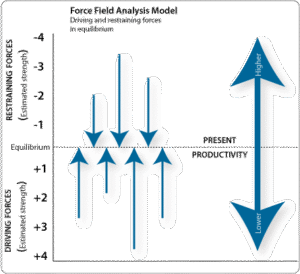
This article throws light on some of the specific enabling and restraining factors that influence and affect the readiness of the coachee for coaching using CFI’s Coachee readiness model. (given below)
It must however be pointed out that no coachee is likely to be completely or 100% ready for coaching with all the strong enabling factors and no inhibiting factors. It is however necessary that there sponsors are able to use this model to ascertain if there is on balance a good or even adequate level of re

There are at least four factors that enable coaching readiness.
Executive Motivation
The most important enabling factor for readiness is the Executive’s motivation to change, improve and go to the next level.
The meta study of Assay, Lambert et.al (1999) about the factors contributing to success in therapy attributed 40 percent of success to client factors. In other words, this epoch making research suggests that it is clients themselves and the circumstances of their life situation that account for the most important element of the change process. This includes the client ‘s own inner strengths and external supportive elements in their environment including friendships and family, membership of a close networking group, religious affiliations, hobbies and leisure activities. The inner factors like self belief, the ability to identify a focused issue or goal, persistence and sense of personal responsibility to work towards it are also key ingredients that account for executive motivation and successful coaching outcomes.
Emotional Intelligence
Coachees should have at least a base level of emotional intelligence which gives them the necessary self awareness, the ability to understand others, the ability to engage in social interactions and control and moderate their emotions. While we do not expect mastery, its absence should not derail the process. For example, if certain individuals have blind spots that are impermeable, any amount of assessment and feedback can be ineffective and the coach may not be able to make any progress.
Managerial Support
Coachees do not operate in a vacuum. They spend most of their working time with their managers whose support, guidance and endorsement and alignment is key for success. For the CEO, this could be the Board, for a CXO, it could be the CEO.
If the Coachee and his or her manager are aligned on all substantive issues and also enjoy a good interpersonal relationship, the coachee’s ability to reenter the workplace and attempt new behaviours and succeed will be very high. Even if there are minor differences, Coaches can help and empower Coachees to take the initiative to resolve these differences.
Challenging work
Coaches help coachees develop new perspectives, belief systems, skills and behaviours. However, all this has to be finally put to use at the workplace. For this, they must have work that challenges them and stretches them and helps them test these new found abilities. When their work itself is challenging and they have the benefit of a Coach who gives new abilities, the combined effect can be transformational.
Inhibiting Factors that impair Coaching readiness
There are at least four factors that inhibit coaching readiness.
Performance issues
If a coachee has serious issues with his current performance, Coaching may not be the right solution to help him. There might be need to explore the causes and come up with suitable improvement plans. Coaching certainly cannot be an intervention arising out of a performance improvement plan.
Here it is important to differentiate between individuals who have performance problems and those who desire to enhance their performance. Coaching can certainly help the latter but not the former.
Career Derailment
If an executive is facing career derailment (a condition where his career has literally gone off track and he is no longer progressing as well as he was and is even facing the possibility of slowing down or even being ignored and ultimately asked to go elsewhere) is he suitable for Coaching?
Well, Coaching can actually be an extremely effective solution for executives who are facing potential derailment. However, it depends on how quickly this has been identified and addressed. The truth is that like debilitating diseases, career derailment is hard to spot in the early days but easy to correct. It is however easy to spot much later but harder to correct.
So, depending on when it as been identified, Coaching can or cannot work. Much also depends on the presence of other enabling factors and absence of other inhibiting factors.
Psychopathological problems
Coaching will be an inappropriate intervention when the individual in the organization suffers from psychopathological problems such as anxiety, depression, addiction, schizophrenia and serious personality disorders. Such individuals may require therapy and even clinical intervention and is well outside the realms of Coaching.
In fact, there is a huge danger and professional risk if such individuals are referred to Coaching and Coaches also choose to work with such individuals. Sponsors need to be mindful of such conditions among potential coachees (though likely to be quite rare a few in numbers) and refrain from recommending them for coaching. Instead they may want to look at other sources of therapeutic help.
A case for good judgment
It must be reemphasized that arriving at coaching readiness is not a mathematical process. There is no magic formula here. It has been our experience that even when coachees had one or more inhibiting factors, they still benefited from coaching because they also had in very strong measure, many of the enabling factors.
Arriving at a sound judgment about the balance between these factors is therefore a key task for sponsors.
If they indeed make the right decision, they will not only end up helping the coachee but also themselves and the coach. If they instead use coaching indiscriminately, they will do all concerned a huge disservice!
-Dr. S. Sabesan
Building a Coaching Culture within Organisations
As more and more research points out to the impact of managerial styles on employee engagement, companies are realizing that the only way to achieve this is by helping their leaders at all levels become coaching oriented in their dialogues. This means they must acquire the necessary skills. As there is pressure on managers to develop their people from within, there is demand for them to become Internal Coaches and envision, enable and empower their employees to reach their true potential. As one generation passes on the baton to the other, there is a huge expectation that those with wisdom will play mentorship roles formally or informally. Therefore, coaching is becoming the predominant style of managing and working together. Similarly, commitment to organization effectiveness is embedded in a parallel commitment to improving the people.
This is why more and more organisations are talking about Creating Coaching Culture. Building a coaching culture holds the potential and promise to achieve strategic objectives and improve the business results of the company.
Put differently, when organisations ask themselves, what kind of a culture they need the most in order to achieve their goals in the next 5 years, most are likely to end up referring to coaching orientation in one form or the other.
We at CFI are witness to a huge interest being shown by many of our clients in creating a coaching culture within their Organisations. While these organisations provide a range of development inputs and feedback opportunities to their employees, they believe strongly that unless there is a culture of coaching among those responsible for leadership development, they will not achieve their goals. Therefore, they feel the need to embed a coaching culture into the organisation’s ecosystem.
This means that Organisations need to integrate coaching into their talent management processes such as selection, staffing and succession which ensures that people who are hired, promoted and retained are role models for the emerging coaching culture.
What does a coaching culture bring to the organisation?
A Coaching culture would result in following specific outcomes to the organisation.
– Leaders would pro-actively contribute to the development of others by being coaching oriented in their conversations.
– People are able to change roles rapidly as business needs change.
– People challenge and support their colleagues mutually and live up to the best they are capable of becoming.
– Knowledge will be widely shared and utilized.
– Decision making would become participative.
– A climate of trust and openness would permeate the organisation.
– Learning and development would be viewed as top priority.
– Increased employee engagement, enhanced job satisfaction and morale and greater collaboration among team members are visible.
– The Organisation will be able to reach the market position it deserves rather than where it is today.
How to bring about coaching culture ?
CFI helps address this need by providing the right process frameworks, the skills and guidance.
At the most basic level, all leaders need skills to have powerful conversations. Conversations that are full of empathy, attunement, challenge and encouragement. Our programs lay a significant emphasis on skills using the Gerard Egan Skilled Helper model.
Leaders also need the help of a set of processes and guidelines to engage in coaching conversations that lead to meaningful outcomes. CFI has evolved a detailed three stage coaching process which provides coaches with scaffolding to navigate their way through a Coaching relationship.
Finally, the organisation itself needs to put in place a sound framework to integrate all its efforts to create a coaching culture. CFI helps create awareness among potential coaches and coachees. In addition to ensuring that the supervising managers are fully involved in the coaching process, CFI also puts in place a supervisory system to ensure that professional standards are adhered to.
To make such an impact at the cultural level, the active involvement of the CEO is critical. It certainly helps if the CEO himself or herself has experienced the benefits of Coaching firsthand.
If Coaching has to make a significant business impact and has to become a movement like the quality movements and so on, the change must happen at a cultural level.
-Dr. S. Sabesan
Cross Cultural Perspectives
A monkey and a fish were caught in a terrible flood and were being swept downstream amidst torrents of water and debris. The monkey spied a branch from an overhanging tree and pulled himself to safety from the swirling water. Then, wanting to help his friend the fish, he reached into the water and pulled the fish from the water onto branch. The moral of the story is clear: Good intentions are not enough.If you wish to help the fish, you must understand its nature.
-Ancient Chinese Fable
Freidman’s flat world concept is a reality. ‘India’s global power houses’ co- authored by our own Pradipto with Nirmalya and Suj raise the importance of cross-cultural perspectives for economic growth and success mediated through leaders with a global mindset. On a marketing plane Kraft foods began its success only after learning and adapting to the reality that the Chinese do not like Oreo biscuits to be made sweet and the Indonesians want them sweeter! So we have three types of Oreo biscuits for three countries and Kraft foods is finally blossoming as a global company with this simple understanding of their global customers. Prahlad has time and again alluded to the opportunities for creative business models for wider application when leaders move with a learning mind and heart beyond their borders. I invite the readers to reflect on the implications of the following ideas which I found very useful to me in my cross-cultural training activities including during the last two months of training work with global company heads and leaders in Seattle.
Cultural types
Terrence Brake has given us this useful framework to look at various dimensions of managing globally. We must remember that these types are not water tight compartments. A country like India can have features of more than one type
| Autonomy | Consensus | Status | |
| Key Features | Individuality & Independence |
Driven by need for harmony. Alienation from the group can be traumatic |
Honor, respect for individuals and groups very important. Identity of individuals connected to a group like family, class, clan etc. Loyalty to strong leaders essential |
| Where they are found | Australia, New Zealand, USA, Canada, Northern and Western Europe | Many parts of Asia like: Japan and to a lesser extent China and Korea | Southern Europe, South America, Africa and the middle east |
| Impact upon communication |
Prefer explicit and precise communication
|
Are indirect, meaning is dependent on who says what to whom
|
Tend to be rhetorical, emotional, using exaggeration and repetition
|
| Impact upon motivation |
Desire to achieve
|
Desire to gain affiliation
|
Desire for power
|
| Feedback | Direct and two-way. US and UK tend to start and with encouraging words. In Germany criticism is more direct |
Feed back is indirect, informal and continuous. Focus is on performance in the team. Save face.
|
One way feed back, intermediaries for negative feed back. Reputation is vital.
|
| Presentations |
Short, well structured, dynamic with supportive data. Many questions asked.
|
Low key Lots of supportive information with visuals. Audience attentive but not participative
|
Warm, personal touches and soft sell. Audience will interrupt with many questions. Will appreciate flexibility and gently bringing back to the topic.
|
| Negotiations |
Fast and tied up with legalities
|
Slow and require trust over time, contracts are broad and subject to change.
|
Take time to form trusting relationships. Impatient with overly legalistic contracts
|
Applying cultural cross cultural models
In my seminar with leaders from global and Indian Organisations I use the insights from the work done by people like Terrence Brake (shared above), Hofstede, Triandis and Tramponar to develop deeper appreciation about cross cultural differences. Non Indians in my workshop become more conscious of relative importance for trust building before decision making. They also realize the hierarchical nature of our culture and the longer time it takes to get things done initially. This helps them to work with Indians far more effectively.
Similarly it helps Indian leaders to learn to become more assertive and more explicit in their communication and also lot more structural in the way they manage time. With this heightened appreciation of one another’s culture, global leaders are able to transact business far more effectively.
For reflection
From this idea can you see possible opportunities to enhance your cultural sensitivity with your multicultural clients, collaborators and competitors? What creative possibilities occur to you in relation to diversity, inclusion in this fast developing global economy? Most importantly how can coaches demonstrate respect and cultural empathy in helping leaders move to the next orbit of excellence?
I would love to hear from you.
Suggested Readings
- Argayle, M. (1988). Bodily communication (2nd ed.). Madison: International Universities Press.
- Auerbach, J.E. (2001). Personal and Executive Coaching: The Complete Guide for Mental Health Professionals. California: Executive College Press.
- Axtell, R. E. (1993). Do’s and taboos around the world (3rd ed.). New York: The Parker Pen Company.
- Brake, Terrence.(2002). Managing globally (first American edition).New York: Dorling Kindersley Limited.
- Hill, C. W. L.(2002). International Business: Competing in the global marketplaces (3rd ed.). Boston: McGraw-Hill.
- Kumar, N. (2009). India’s Global Power Houses: How they are taking on the world. Boston: Harvard Business School Publishing.
- Matsumoto, D.(2000). Culture and Psychology.( 2nd ed.)Belmont,CA:Wadsworth.
- Morris, D., Collett, P., Marsh, P., O’Shaughnessy, M. (1979). Gestures: Their origins and distribution. New York: Stein and Day Publishers.
- Passmore, J. (2007). Excellence in Coaching: The Industry Guide. London: Kogan Page
- Richmond, V. P., McCroskey, J. C., & Payne, S. K. (1991). Nonverbal behavior in interpersonal relations (2nd ed.). Englewood Cliffs: Prentice Hall.
- Samovar, L. A. & Porter, R. E. (2000). Intercultural communication: A reader (9th ed.). Belmont: Wardsworth Publishing Company.
- Zuckerman, E.L.(2000). Clinician’s Thessarus (5th ed.). New York: The Guilford Press.
-Dr. B J Prashantham
Coaching for Execution
ABSTRACT
Smart CEOs understand the interdependence of strategy and execution and do not get carried away by the so-called glamour of strategy alone. For them the execution of strategy needs as much of their attention and involvement, as does the formulation of strategy. They know that the journey from strategy to desired-results can happen only when the organization imbibes a culture of disciplined-execution and building and sustaining of such a culture is one of the most important jobs of the CEO. They place as much emphasis on their own development, as on the building of the skills and competences across the organization.
Execution – A View from the Top:
About 800 CEOs across 40 countries, who participated in a 2007 survey by the organisation The Conference Board, while identifying 121 different challenges, chose excellence of execution as their top challenge and keeping consistent execution of strategy by top management as their third greatest concern. Sustained and steady top-line growth was second, profit growth was fourth, and finding qualified managerial talent fifth. It appears that these top-5 concerns tell a simple but powerful story – i.e., execution of plans through people is vital to drive revenue and bottom-line growth.
As an Executive Coach now and as someone who has led businesses I have had the opportunity to look at the subject of execution from the outside and inside with much fascination. It is this perspective that I bring to the article.
Execution as a culture and a discipline:
While much emphasis is placed on formulation of strategy and plans – both in B-school curriculum as well as within work places, prudent senior executives and CEOs understand the interdependence of strategy and execution. For them execution is an all-pervading discipline and a significant part of a company’s culture.
Companies aspire to achieve aggressive goals and the congruence of achieved-results with aspirations, is an outcome of relentless focus on execution, right from the CEO, all the way down. The best laid plans can be challenged and a CEO with a bias towards execution constantly strives to narrow the gap between aspiration and results – thereby earning the trust and respect of the board and the shareholders as well as that of the employees.
For a company to make the journey of strategy-to-desired results, it must build the skills and competences required across the levels in the company. A CEO who values the discipline of execution knows that execution an execution culture is built painstakingly over time and losing it is easy. No wonder the CEOs picked “keeping consistent execution” as one of the priorities in the 2007 survey.
Where the rubber hits the road:
Companies that build and sustain an execution culture know that strategy and execution come alive in the fringes and so the execution ability of front-line employees – at the shop-floor, at various customer touch-points etc. is vital.
In such companies, the font-line employees use company operating systems and problem solving approaches like Six-Sigma, supported by the management’s (from CEO, all the way down) strong bias for self-managed teams to enhance their execution abilities. A workplace where font-line is steeped in an execution culture is characterised by a good understanding of the big picture and how the unit / cell / team level goals and action plans are linked to the big picture, standard-work / procedure, data-gathering to understand variance and causes and taking remedial actions, seeking customer (internal/external) feedback, visual score-boards, team-meetings and established escalation processes.
Interestingly, I have noticed that execution oriented cultures tend to demonstrate strong social competencies like confidence, intentionality, relatedness, capacity to communicate and cooperativeness given the emphasis on self-managed teams and teamwork in general.
Competencies that characterize Execution:
In a company that executes, at the middle- and upper-management levels, it is all about providing strong sponsorship to the front-line and setting them up for success. The efficacy of this sponsorship depends on the competence of the managers and the vital few are:
1. Professional Competence: Contemporary, deep domain-expertise; Core-skills of execution: Planning skills – covering goals, timelines, resources allocation and metrics, Risk analysis and mitigation.
2. Managerial Competence: Goal-setting; Delegating with accountability; Managing for performance – setting up and working the reporting and review systems, managing review meetings.
3. Leadership Competence: Clarifying the big-picture and linking it to initiatives; Leveraging interdependence ; Leveraging Diversity; Surfacing issues, stepping up to conflict and conflict resolution; Overcoming fears and limiting beliefs – such as fear of failure.
4. Coaching Competence: Feedback and counselling for performance improvement; Motivating individuals and teams; Understanding teams and team –dynamics; Bias for learning.
Companies that push hard for an execution culture coach their managers to develop the above skills to make them successful at execution. I have always realised that improving leadership and coaching competencies calls for stepping up psychological literacy with a very strong emphasis on continuous self-awareness. An early exposure to and awareness of the Rogerian2 concept of fully-functioning person and the use of self-awareness interventions can help the individual take actions for self-improvement3. Managers focused on execution show significantly higher levels of understanding and use of EI. They deploy the psychological competences of a coach having an inquiry-based approach that balances the managerial, directive-based approach and take a lesson-learning view on failures. Social competencies of managers who are good at execution include skills like being able to step up to conflict by seeing constructive-opportunity in conflict, keeping stake holders included and managing relationships with objectivity while recognising the emotions involved. So contrary to popular belief managers who thrive in execution cultures on a sustained basis are psychologically literate and emotionally intelligent, far from the alpha male that they are made out to be.
CEO leads by example:
The gap between aspirations and achieved results is all about execution and it all starts with the CEO who is:
• Passionate about his / her vision and goals.
• Focused on building a top-team where commitment to vision and values are fundamental for membership while professional competence, accountability for results, espousing constructive-conflict and building trust4 are vital for staying on as a member.
• Driven by the belief that execution is fundamental to strategy and it has to shape it5. Therefore he / she shows equal emphasis and ease in crafting strategy as well as the review of action plans, down to the “last-mile” initiatives.
• Actively engaged in communicating across the various levels of the organisation and uses the opportunities to share vision and talks of actions and results.
• Using every opportunity to have conversations that help uncover realities that could impact the journey to results. Using the knowledge of business to constantly probe and question to bring weaknesses to light and rally the people to correct them5 with the aid operating systems and excellence framework that are established in the company.
• Concerned about alignment and fairness of rewards system with goals-set.
• Championing the vision and goals with all the board and other external stakeholders and enlisting their support to help the organisation succeed.
• Constantly working on his / her self-awareness and demonstrates at all times the fearlessness in putting results before personal status, holding people accountable and shunning personal popularity, valuing reasonable clarity over picture-perfect precision, seeing opportunity in conflict rather than settling for the comfort of harmony and showing his / her vulnerabilities to earn trust6.
Coaching the CEO:
Finally, given the paradoxical situation of having to commit to “employee engagement” with a “lonely at the top” feeling, one may be right to conclude that perhaps at the CEO’s job, the psychological competencies assume a much heightened importance. By visibly seeking out executive coaching opportunities for themselves proactively, the CEO can reinforce the fundamental belief that continuous learning for improvement is at the core of the organisation’s execution culture.
The ability to set a purposeful vision, build and nurture a top-team, articulate strategy and following through by keeping employees engaged in actions with an accountability for results are all exciting but daunting challenges for the CEO. This is where CEO coaching for execution can make a huge difference.
The CEO coach who is qualified (as a coach) and experienced (having been a CEO) comes with a strong blend of expertise and experience to hold conversations with the CEO and help the CEO look at his own style and its effectiveness for execution.
These coaching conversations can also respectfully and meaningfully challenge the CEO’s beliefs and behaviours, in the interest of improving the execution within the organisation. The coaching intervention then moves to the next phase where the coach helps the CEO craft sustainable strategies to achieve the outcome and then undertake an objective assessment of progress made by the CEO. In fact, the whole coaching experience in itself can be a proving ground for the CEO’s beliefs about execution.
Derailers that jeopardize execution:
Just as I have noticed several common threads among CEOs who are excellent at execution, I have also seen the existence of the “usual suspect” list of causes that derail execution because of the CEO style.
When the CEO does not spend enough time on execution; does not hold people accountable; does not move fast to replace / change players on his team; does not shed bias towards “pet theories “ his own and others’; does not conversations that surface realities; does not deal with turf-wars; does not commit to resources even after a strong case; does not show genuine interest in coaching his team; does not show tolerance to and take a lessons-learnt view of failures; does not pay attention to rewards and recognition, I have seen execution fail.
Managers in an organisation tend to model their behaviour around what the CEO expects (or tolerates) and consequently, much of the “execution-derailers” that show up at the highest levels in the company, manifest all the way down to the front -line.
Execution – what separates the best form the rest
A CEO’s success depends on deliverables as seen / felt by the customers, the board, the employees, the suppliers and other stake-holders. The consistency and the trend of results over a period of time, despite the vicissitudes of economic and market cycles are vital. Such balanced and consistent performance calls for a CEO who espouses execution and works relentlessly on keeping alive the organization’s execution-culture. Most important execution depends as much on emotional intelligence as it does on strategic insights – a relationship seldom understood.
References:
1 Daniel Goleman (1995), Emotional Intelligence, Bantam Books, NY, USA.
2 Carl Ransom Rogers (January 8, 1902 – February 4, 1987), an influential American psychologist and among the founders of the humanistic approach to psychology.
3 Sharon Daniels, Chief Executive, AchieveGlobal (2010) For a Better Career Outlook, Look Inward, http://blogs.hbr.org/cs/2010/09/for_a_better_career_outlook_lo.html
4 Patrick Lencioni (2002), The Five Dysfunctions of a Team, Jossey Bass, SFO, CA, USA
5 Larry Bossidy & Ram Charan (2005), Execution – The Discipline Of Getting Things Done, Crown Business, NY, USA.
6 Patrick Lencioni (1998), The Five Temptations of a CEO, Jossey Bass, SFO, CA, USA
-Sundar Parthasarathy
Systems Perspective as a Differentiating Coaching Competency
Will the approach and perspective of a counsellor who is counselling a client who is an adolescent be different from the approach and perspective of a counsellor who is counselling a couple who are having marital problems? I certainly believe yes!
While the range of skills and the processes adopted by counsellors would be similar in both situations, the contexts of the two clients are very different. In the former, I believe that the counsellor must be cognizant of the challenges of adolescence, the role of the family, the impact of societal pressures, key relationships at play and so on to achieve effectiveness in the counselling relationship. In the latter, the counsellor must be cognizant of the socio-psychological drivers of marital harmony and discord, the role of economics or extended families, in addition to other critical contextual factors. This approach of seeing the client not in isolation but as belonging to a holistic system and understanding the impact of the various sub-elements of the system on the client is what is called a Systems Perspective. Some call this contextual knowledge.
What is relevant to the field of counselling is equally relevant to the field of Coaching. While coaches need to posses the right values and skills and adopt the most appropriate processes and use the most effective tools, they also need to have the right systems perspective in order to be effective in their coaching relationships. In an Executive Coaching context, systems perspective will mean knowledge about the Organisational and business processes, cultural and climate factors, strategic imperatives and the environmental factors and most importantly career life stage issues, needs and dilemmas that impact the client and shapes his or her behaviours.
The importance of a systems perspective for Coaches goes beyond mere effectiveness – it seems a prerequisite. It has been our experience in CFI that when Organisations seek out coaches they almost subconsciously seek out not just the most skilful coach but the coach who brings the greatest systems perspective to his coaching engagement. They do this be seeking our Coaches who have “been there and done that” – coaches who have experienced or witnessed all or some of these system issues and dilemmas. In this article I would like to examine the subject from a variety of perspectives so that Coaches are able to nurture and develop this dimension and also leverage it in their coaching engagements.
Systems perspective in an executive coaching context
Executive coaches are focussed primarily on helping executives in Organisations solve problems and achieve their full potential and through that make a difference to their Organisations and themselves. In that sense Executive coaching engagements are initiated for some very strong business and Organisational reasons that must be well appreciated.
It must also be understood that executives who are seeking coaching support function within the boundaries of an organisation and their performance, effectiveness and even their level of engagement is influenced by a multitude of systemic factors. For coaches to be effective they will therefore need to have a sound appreciation of this systems perspective.
Let us now understand the various dimensions of this systems perspective in an executive coaching context especially as it relates to CXO coaching.
a. Business perspective
Executives at the CXO level are very deeply concerned about and held accountable for the success of the businesses they are leading. The key business levers of growth, profitability, diversification, structural changes and so on impact the client and the client’s work quite often has a lot to do with impacting these dimensions. Coaches who are able to appreciate how these impact his clients are likely to understand their world better and be a lot more empathetic to their situation.
In addition to these key business levers, even business ownership patterns have a profound impact and influence on executives and their own performance and effectiveness. The ways in which a family business works is quite different from the ways in which a global corporation works. Coaches who are cognisant of these subtle differences are able to spot the impact of these contexts on their clients and help them, especially when clients have migrated from one ownership context to another and are struggling to cope.
b. Functional perspective
Closely linked to the business perspective is the functional perspective as it applies to the client. Clients quite often belong to some function or profession and as a result many of their beliefs, concerns and challenges are influenced by the function or profession they belong to. Therefore, when a Coach is dealing with the Head of Sales & Marketing, it would help if the coach had a broad appreciation of the contours of the sales & marketing function, how it works and what its key imperatives are so that he is able to ask him the right questions and gain a deeper understanding about his context at work.
Similarly, when a coach is speaking with a CFO client it would help if he had even a basic understanding about the role of a CFO and some of the typical dilemmas he might face in fulfilling his responsibilities.
c. Career life stage
As executives progress in their careers they pass through various career life stages and transition points. There is a large body of knowledge about the typical needs, issues and dilemmas at each of these career life stages.
For example a functional head who is taking on a cross functional responsibility would have a certain typical set of needs and concerns. A manager migrating from an operating role to a strategic role would have certain typical dilemmas. So also a first time CEO would have his own typical challenges and developmental needs.
Coaches who have experienced or observed these career life stages and transition points are likely to be very quick in understanding their clients and diagnosing the needs of their clients be a lot more empathetic in their interactions.
d. Organisational process
Clients work within Organisations and are most deeply impacted by a whole range of Organisational processes and behaviours. The way in which the Organisations plans, takes decisions, collaborates, manages and evaluates performance, rewards people, shapes careers, manages change, upholds values and so on has a huge impact on the effectiveness of the client. The client’s efficacy is also largely impacted by the extent to which these Organisational processes are aligned to his own values and beliefs and his professional way of working. The client’s dilemmas and development needs can easily be understood by coaches who have experienced these Organisational processes and can relate to it.
Leveraging the systems perspective
How does a Coach leverage his/her systems perspective?
Coaches can use their systems perspective to firstly empathise with their clients. They can ask better questions and help their clients tell their stories more completely and concretely. They can also use this insight to help their clients gain new perspectives and zero in on the agendas that will give true leverage. Most importantly, coaches are likely to establish a far higher connect when their clients experience them as someone who understand where they are coming from.
Developing and nurturing a systems perspective
Executives who have been there and done that tend to quite naturally find it easier to bring the systems perspective into their coaching engagement. Many executive coaches tend to be independent professionals and come from varying backgrounds. While some may have had held executive positions at senior levels, others might have held executive positions at a middle to senior level before having migrated to become trainers, facilitators and consultants.
Whatever might be the background coaches must find ways to constantly stay alive to business and Organisational realities all the time. Given the rapid changes in the business environment, even experienced executives must ensure that their perspectives are current and not outdated. From this point of view the right balance between consulting and coaching will ensure that coaches are able to bring insights from their consulting to their coaching conversations just the same way they would carry the power of their coaching skills into their consulting assignments.
CFI actively encourages it members to share coaching cases with their peers and learn valuable lessons about what their clients need and what their context looks like. By working closely with clients through its consulting practice, CFI ensures that it keeps its systems perspective alive and brings the benefit of this insight to its CEO Coach training.
Limitations
The real dangers of a coach with a strong systems perspective is that he may end up telling his client what he has to do or might even be too prescriptive in his diagnosis. This is a watch out for all coaches in general but more so for those who have been there and done that.
I must also clarify that a system perspective does not mean that the coach must be familiar with the intricacies and business specific domain know-how of his client or even the nuances of the client’s role. What I am talking about is a very broad understanding which can be developed and nurtured through formal managerial education as well as through constant interface with those in business.
Coaches spend a lot of time and effort to become more and more skilful in their conversation, conversant with the right processes and proficient in the use of data to forward the coaching agenda. If they also have a sound systems perspective, they will make a remarkable contribution to their clients.
-Ganesh Chella
What’s Wrong with Giving Advice?
The Coach is listening intently to his client as the client narrates in great detail the specifics of the problem he is facing at work. The Coach is deeply attuned to his emotions, his experiences, his intentions and his state of being. The empathy is complete. However, the Coach begins to go beyond empathy because he “has been there and done that”. In his mind, he is very clear about what his client needs to do to solve this particular problem. While his training as a Coach has led him to believe that giving advice is strictly forbidden his training as an executive is leading him to believe that it is a sin not to tell the client what he should do to solve his problem and allow him to struggle with it. In all my conversations with the coaches we train and the existing coaches with whom we engage in a supervisory relationship, the subject of giving advice always comes up.
Many wonder if this self imposed restriction on giving advice is a western idea and even suggest that in India, our culture strongly encourages people to pass on their wisdom to others especially because the recipient is more than willing to receive it. They also argue that they have been chosen by their clients for their credentials and wisdom and it would be unfair not to share it with them merely because they have to adhere to some norm about advice which seems hard to accept.
In this article, I would like to share some of my perspectives about the place of advice in an Executive Coaching relationship. I would like to look at this from two perspectives – the content and the timing.
The context of advice
Advice is a form of challenge, support and encouragement and has its legitimate place in a coaching relationship. Also, in many helping relationships the helper is not merely a coach but also a manager, a consultant, a skilled expert, an advisor and so on. In other words, in settings outside of pure executive coaching relationships the subject of giving advice assures real significance.
In his classic, “Essential of Skilled Helper” which is CFI’s prescribed reading for its Coaches, Gerard Egan has identified information sharing as one of the challenging skills for coaches.
Gerard Egan clarifies that sometimes clients are unable to explore the problem fully, set goals, and proceed to act because they lack information of one kind or other. For example, when clients tell their stores it might help them to know that they are not the first to have a problem of that kind. Similarly, when clients are examining what they actually require, sharing relevant information of a factual nature would help them clarify the possibilities and set clear goals. Similarly at the stage of action planning, information sharing could help clients become aware of the typical bottlenecks that they might face.
Gerard Egan sees information sharing as a challenging process because it shows clients new perspectives and is meant to push them to act.
Gerard Egan looks at information sharing as both giving correct information and correcting wrong information. He also sees information sharing as a source of confirmation and support for the clients.
Gerard Egan, however, draws a clear distinction between information and advice. He sees information as professional guidance and advice as “telling clients what to do”.
Therefore, my view is that it will be useful to stay within the realm of information sharing or professional guidance and refrain from using the term ‘advice’ which tends to focus on telling people what to do.
The timing of advice
Having understood the real meaning of advice which we will now begin to call “guidance”, we can now turn our attention to understanding when such guidance should be delivered. It is my experience that many of our clients’ problems and unused opportunities arise out of their inability to see their situation completely or accurately or see it through a whole series of mistaken beliefs and assumptions. Therefore people act and react in a certain manner because they firstly think in a certain manner and have been continuing to think in that manner because they are not aware of this manner of thinking and its impact on their effectiveness. In this context, you must now start examining the role of guidance in helping clients and when such guidance should be delivered.
When a person is yet to recognise and confront some of his mistaken ways of thinking it is not likely that he will accept guidance to act differently. For example, if an employee has been failing on his job because of a mistaken way of thinking about customers, peers, team members and his manager chooses to advice him on what he should do, he certainly is not going to change because at that moment, he is still seeing the problem as caused by others and not by his mistaken ways of thinking. This is where guidance/advice when timed badly, can either be of no use or even destroy the helping relationship over a period of time.
In this context, it would be useful to pay attention to Gerard Egan’s three stage skilled helper model.
In Stage I, when the coach is helping his client tell his story and tell it completely and then beginning to challenge him, so that he gets new perspectives, his entire focus is on understanding and challenging. There is very little place for advice at this stage except where information is used as a means of challenge. If the coach has succeeded in helping his client in challenging himself in helping him see new perspective the client may come around at examining what change will give him leverage. At this stage, the client begins to look at defining the change agenda and making commitments and taking actions.
Having crossed this stage, client is looking for strategies to implement the change agenda. This is the stage at which appropriate professional guidance by way of a range of ideas and solutions can be useful. Even here, the emphasis is on generating ideas, sharing information and correcting mis information. The focus is not telling the client what he should do.
In summary, guidance of any kind is most effective after clients have challenged their ways of thinking and not before that. We all recognise that we live in a world of information overload. The average executive has significant access to every source of information and insight. He also has access to several sources of self help. Yet, we all know that none of these translate into new behaviours.
Therefore, the real benefit that a coach can bring to his client is through his ability to help him challenge himself rather than jump to give him advice on what he should do. Of course, well informed professional guidance delivered at the right time is always useful.
-Ganesh Chella
Neuro Linguistic Programming (NLP) and Coaching
Leveraging the power of Alternative Interventions in Coaching – an NLP perspective
The term Neuro Linguistic Programming (NLP) was coined by its co-founders, Richard Bandler and John Grinder, to represent the connection between neurological processes, language and the behavioural patterns that have been programmed into us through our experiences since birth, which can be organized to achieve specific goals in life. Bandler and Grinder claimed that NLP would be instrumental in “finding ways to help people have better, fuller and richer lives”.
NLP is a simple, skilful method for studying what goes on inside a person (the subjective experience) and the processes that people use to build their unique, distinctive maps or models of the world. It is about how the brain works; how people think, feel, learn, motivate themselves, interact with others, make choices and achieve realistic goals. The objective is to increase the behavioural choices available to us, with a presupposition that the more choices and possibilities we become aware of and make available to ourselves, the more we will become aware of and be able to fulfil our desires.
As an executive coach and an NLP practitioner I find that there are several ways in which I can leverage the simple and practical tools of NLP to forward my coaching relationship.
In the coaching context, NLP is best suited to help the coach a) get into the ideal state for coaching b) build rapport with the client, c) communicate effectively with the client, d) support the client in eliminating his self limiting beliefs and learned limitations which could include low self esteem, lack of confidence, low assertiveness or just about anything that is holding the client back from being the best he could be, and finally, e) build resilience both in herself and in the client.
Let us look at these one by one…
Get into the ideal state for coaching
The coach can use NLP to explore her own values, beliefs and goals, establish strategies to achieve her goals, and streamline her approach. This will help enhance her coaching skills and make her more effective. One of the techniques that is often used to get into the ideal state is called “Anchoring”. This involves associating a particular stimulus to a desired response, to get herself into the desired state for coaching – say the state of being completely tuned in, empathetic, respectful, genuine, non judgmental and non directive towards the client. The coach would build this ideal coaching state for herself and associate an anchor with it. While working with a client, she could trigger this anchor whenever she needs help in maintaining this state. The coach could also establish a similar anchor for the client to, for instance, calm him down and bring him back to the present when he gets agitated or negatively associated with his past experiences.
Build rapport with the client
NLP believes that our internal world is manifested in various ways in our external behaviour. If the coach is able to calibrate the client’s nonverbal cues and match her communication style to that of the client at the appropriate sensory level the coach is better able to build understanding and rapport and facilitate the exploration of his needs. One of NLP best known techniques is “Rapport building” which builds on the premise that people who like each other tend to be like each other. This consists of subtly and unobtrusively mirroring the body language, speaking patterns, tone, pitch, speed and even the breathing rate of another individual. For example: leaning forward when the client does; speaking slower when the client does; using phrases like “I see what you mean” for a client who is more visual in nature, or phrases like “I have a feeling that you are right” for a client who is operates from the kinaesthetic, help in building the said rapport. By thus building rapport, the coach can create an unconscious empathy with the client and help him get settled and remain comfortable through the coaching sessions.
Communicate effectively with the
According to cognitive psychology, each of us have our own map or model of reality and hence experience the same reality differently. This reflects in the way we think, speak and act. Often pre-existing beliefs, strategies, memories, and decisions cause us to miss out or even hide information by unconsciously deleting, generalizing and distorting information we provide to the person we are communicating with.
Everything a coach needs to know about successful communication in the context of coaching is encapsulated in the NLP Meta Model which helps the coach ask the right questions and challenge linguistic distortions, clarify generalizations and recover deleted information which occurs in a client’s statements, thus helping her better understand the client’s current situation. Typically, questions may be in the form of “What specifically?”, “How specifically?”, “According to whom?”, “How do you know that?”, “In comparison to what?”, “Was there ever a time when …?” This helps the coach align the client’s perceptions with reality, which in turn make subsequent goals and action plans more specific and effective in achieving the results required.
For example if the client says “Everybody is mean to me”, he is using the universal quantifier “everybody” to possibly expand a specific painful situation to the level of being persecuted by the universe. In this case, the coach’s response might be “Everybody? Which people, specifically?”
Or if the client says “He never listens to me”, the coach might respond with “Never? Was there ever a time when he did listen to you?” Or if he says “They don’t like me”, the coach might respond with “Who specifically does not like you?” followed by “How do you know that X doesn’t like you?” Or if the client says I can’t tell the truth, the coach could respond with questions like “What would happen if you did?”, “What stops you?”, “How do you stop yourself?”
Such questions help the coach elicit a verbal representation of the client’s full experience. They also help her evaluate the client’s answers in conjunction with body language, breathing and voice changes as discussed earlier. In time, the Meta Model helps the coach become much more effective in empowering the client to find his own answers.
Support the client in eliminating his self limiting beliefs and learned limitations
NLP offers a powerful technique called “Reframing” which helps in dealing with problems by finding and using alternative behaviours. In context reframing, we search for another context where the behaviour is regarded as healthy, while content reframing emphasises the positive connotation of any behaviour and transforms a potentially negative situation into a growing or learning experience. A new attitude is inculcated – “How am I going to use this behaviour?” instead of “How am I going to get rid of it?” As a result, what was earlier perceived as a problem is often no longer one. The key lies in finding out what exactly is the positive intention at the root of the client’s behaviour. For example, finding that the positive intention of a teenager’s rebelliousness is to become an independent and capable adult can change how both the parent and the child views that behaviour. To uncover the positive intention, keep asking for what purpose the client said or did something until you arrive at the positive intention. In coaching, we call this finding out the story behind the story.
NLP has other interesting exercises which the disbeliever might think of as far-fetched but which if followed can bring about a sea change in a client’s experiences by helping him change his mental or emotional state, perceive more opportunities, and make better choices for himself. The following can give the coach much leverage while working with self limiting beliefs of the client. The “Belief Change” exercises could help give the client more choices, allowing the subconscious to choose what is best. The “Perceptual Positions” exercises could get the client to step into the shoes of a future confident and successful version of himself. From this position, the client could plan on how to get there and explore the values and beliefs that he has to change to become that person. He could also be made to step into the shoes of a person with whom he is having a conflict, say his boss, to help him see things from the boss’s viewpoint. The “Swish” technique can help the client eliminate unhealthy habits and mannerisms, even those that he may not even be aware of. The “Timeline” intervention can help the client sort out events affecting his ongoing experience and could, for example, help him to let go of self doubt. The “Past Timeline” exercise allows the client, with the help of his unconscious, to transform events of the past and integrate them into the present and future.
Build resilience
NLP advocates leveraging the resources of the individual, including those resources that the client might currently lack but would like to imagine as being a part of his repertoire. The “State of Excellence” technique can help bring the client to a state in which he has all possible resources available to him in a way that allows him to act with full capability. NLP thus teaches the client self responsibility and self reliance.
NLP practitioners have found that the quality of their own lives has improved dramatically by using NLP as they now are able to come up with better strategies to achieve whatever outcome they want in their lives. The key learning from NLP is that by using the set of tools and techniques it offers it is possible to bring about a Core Transformation – transformation at the core of our being, which in turn brings about a transformation in the way we think and act, and thence in our reality – our life as we experience it. We have all the resources that we need inside of us. We have only to let them surface.
Using NLP, coaches can facilitate the greatest impact possible in their clients, both personally as well as professionally. The self talk at the core of NLP is “I am responsible for my own behaviour and I have the resources to handle it!” As coaching speaks the same language, the two disciplines can be integrated easily and harmoniously to the greater benefit of the client, and in many ways even speed up results dramatically making the engagement highly cost effective; a by-product both coach and client will certainly appreciate.
Sources:
Credit for much of this article goes to: Richard P. McHugh, S.J., Ph.D., Mind with a Heart – Creative Patterns of Personal Change, Gujarat Sahitya Prakash, India, 1998, and to the NLP Master Practitioner Course conducted by Dr. McHugh at Ashirwad Bangalore, India, 2009
-Michelle Chaudhuri
Transactional Analysis and Coaching
Leveraging the power of Alternative Interventions in Coaching – a transactional analysis perspective
As change catalysts, Executive Coaches have to enable coachees to develop newer ways of thinking, feeling or acting (cognitive, affective or behavioural change).
To enable this, a key skill in Coaches is the ability to understand and articulate human behaviour, thoughts & feelings. Since this human behaviour is couched in an organizational context, a sound grasp of group dynamics is obviously essential.
In other words, Executive Coaches need a sound understanding of the theory of human behaviour and also familiarity with the use of the right techniques that can enable change.
Transactional Analysis (TA) as a ‘theory of personality’, provides a framework to understand and articulate human behaviour in relation to groups; as a ‘theory of social intercourse’, it also provides a set of tools and techniques to enable change. The “underlying philosophy is one of mutual self respect and caring”, which encapsulates CFI’s coaching values.
This article seeks to outline how coaches can use some elements of TA to understand human behaviour and also how to use some of the techniques of TA to enable change in their coachees.
TA was developed by Eric Berne and deals with several aspects of human behaviour: Ego states, which is a structural analysis of personality; Transactions & Strokes which look at communication patterns; Scripts, the analysis of specific life dramas that persons compulsively play out; Life Positions, attitudes with reference to others/the world; Games, Ulterior Transactions played for specific payoffs. Naturally, a discussion of all the above elements is beyond the scope of this article. I will limit myself to how the Ego States model can be used as a framework for understanding human behaviour and as a technique to enable change.
Ego States: A Framework of Personality & a Technique to catalyse behaviour change
According to Berne, all personalities are made up of three ego states – Parent, Adult & Child. At any given point in time, a person operates in one of the three distinct ego states. (The parent and child are subdivided into two each, making it five behaviour styles). All three ego states are important for a healthy personality.
The Three Ego states can be defined as follows:
The Parent Ego state contains the attitudes and behaviour incorporated from external sources, primarily parents. Outwardly, it often is expressed toward others in prejudiced, critical behaviours or nurturing behaviours. Inwardly it is experienced as old Parental messages which continue to influence the inner Child.
The Adult Ego state is not related to a person’s age. It is oriented to current reality and the objective gathering of information. It is organized, adaptable, intelligent, and functions by testing reality, estimating probabilities, and computing dispassionately.
The Child Ego state contains all the impulses that come naturally to an infant. It also contains the recordings of the child’s early experiences, responses, and the ‘positions’ taken about self and others. It is expressed as ‘old’ (archaic) behaviour from childhood.
Case Illustration: A client was advised to investigate a private school for his son. When he reported his findings about the school where the teaching was informal and creativity encouraged, three distinct reactions were easily observable. First, he scowled and said, “I cant see how anyone could learn anything at that school. There’s dirt on the floor!” Leaning back in the chair, his forehead smoothed out as he reflected, “Before I decide, I think I should check on the school’s scholastic rating and talk to some of the parents.” The next minute, a broad grin crossed his face, and he said, “Gee, I’d love to have gone to a school like that!”
Born To Win – By Muriel James, Ed.D., and Dorothy Jongeward, Ph.D.
Let’s take the example of AK, the head of a Business Unit in a large consumer products company. When AK is ticking off her team member for not meeting his KRAs or setting limits/rules for the performance of a task, she is operating out of her Controlling Parent ego state. When she is providing comfort for failure and support for better performance, she is operating out of her Nurturing parent.
When she identifies the reasons for the poor performance and problem solves to ensure there is no repeat, she is operating out of her Adult ego state. When AK boisterously invites her team to enjoy a celebratory party for a successful completion or creatively finds an out of the box solution to a knotty problem, she is operating out of her Free child. Finally, when she is adhering to organizational policies to ensure that tasks are completed or when she is complying with the expectations of others, AK is operating out of her Adapted Child. (For a quick reference guide of all the behaviours, check ‘Behavior Styles’ table below)
Behavior Styles Table
|
BS |
Description |
Behavioral clues |
Typical remarks** |
|
CP |
Filled with Opinions, conclusions, statements, judgments. Critical of others, know it all. Firmness, laying boundaries, rules. Can be bossy & overbearing. |
Pointed finger, legs apart, arms folded across chest, wagging finger, patronizing or critical tone |
“You must keep in touch with all your ex bosses” “Don’t trust this guy. He’s always smiling” “I think you should get everything in writing. I’m telling you for your own good” “All Politicians are corrupt” |
|
NP |
Caring, sympathetic, comforting, helping, supportive, reassuring Can be smothering and over protective |
Arm or hand on a person’s shoulder, encouraging expression, leaning forward towards the other person, concerned or caring tone of voice |
“Don’t get so upset. Your boss will forget it in a day” “You’ve been working so hard. I thought I’d get you some chocolate to cheer you up.” “Are you new? Come I’ll introduce you around” |
|
A |
Fact based, responds primarily to the here & now, Logical, Reality testing, Solution focused, problem solving |
Relaxed, erect shoulders; Direct eye contact; calm & rational; discussing probabilities; open gestures |
“Can we talk this thru?” “Let’s solve this problem” “Why did this happen? Can we do this another way?” |
|
AC |
Polite, courteous, Adapting, doing the right thing, find it difficult to refuse unreasonable demands from colleagues & customers restrained, afraid to show off, especially polite(sometimes over polite) to customers & senior managers |
Sitting very still, fidgeting nervously, eyes downcast, looking out from under eyelashes, inattentive or very attentive |
“I wish I could …” Lots of ‘please’ and ‘thank you’ “Everyone says we shouldn’t work on weekends” |
|
FC |
Affectionate, curious, enthusiastic, high energy, expressive, friendly, open, creative, quick display of feelings humor, frustration, happiness |
Unselfconscious, head to one side, sitting or standing comfortably |
“Come on! Let’s go and watch a movie!” “Why don’t we start a mobile office?” “I am so angry with the politicians” |
**It is critical to look at supporting tone and other body language clues. Cannot be perceived in isolation.
Thus, the ego states are sources of thoughts & feelings, manifested by corresponding patterns of behaviour, accompanied by typical verbal & non verbal signals. And each of us has all the ego states available to us as a repertoire. In most cases, though, we operate from only one predominant ego state that we draw from, which isn’t consciously chosen or wielded.
How Ego States can be used in Coaching: For the Executive coach, the model facilitates recognition of behaviour patterns & styles that the coachee is operating from; this throws light on several aspects of the coachee’s personality which can feed into coaching goals and in some cases, can be the coaching goals.
SS, CFO in a multinational organization began the coaching discussions with the need to improve his performance & productivity. He maintained that his stress levels were very high and that this has impacted his performance and deliverables. Upon deeper inquiry, we found that the stress was caused by the demands of several business units which competed for his time constantly. The problem statement emerged as his inability to refuse unreasonable demands on his time, as well as his hesitation to be ‘unpopular’.
We completed a 360 degree and gathered feedback from his stakeholders, the results of which tied in with our (coach & coachee) own leadership assessments of the coachee’s primary source of behaviour as ‘Adapted Child’. We used an ego gram to map the behaviour pattern, which expectedly showed a high bar on Adapted Child. (See figure 1) One of the coaching goals was then identified as strengthening his Critical Parent (to set rules & limitations) and Adult (to engage in problem solving with stakeholders rather than concede to their demands), and reducing the Adapted child and Nurturing Parent.
The strength of the model for the Executive Coach lies in its simplicity and comprehensiveness. The ego states model can thus facilitate the coach & coachee in recognizing coachee’s behaviour patterns/styles and also provide a framework for guiding their change agenda. It can be used specifically in coaching agendas when leadership style is the key ingredient.
It must however be cautioned that the ego states must be used more as a means to understand the coachee and should not be used to label the coachee because that would go against our belief of respect and our faith in the coachee as a “becoming person.”
References:
Transactional Analysis in Psychotherapy, Eric Berne, M.D.
Games People Play, Eric Berne, M.D.
What Do You Say After You Say Hello? Eric Berne, M.D.
Scripts People Live, Claude Steiner
TA Today, Ian Stewart & Vann Joines
Transactional Analysis for Trainers, Julie Hay
Born To Win, Muriel James & Dorothy Jongeward
The Anatomy of Coaching Led Change
The ultimate test of a coaching engagement is often the visible change that your client is able to demonstrate to herself or himself, to you and of course to his or her sponsor.
Often times, in the course of our engagement, we and the client believe that this process of change has indeed begun – it is evident from your interactions, from you sense of his receptiveness, from his genuine acceptance and his visible commitment. Yet, you may be unable to show clear evidence of this change early enough. More importantly, you are often unable to convince the occasionally impatient sponsor that the process of change has indeed begun.
You may even feel like appealing to the sponsor: “Hey, you know what, my client has indeed begun to change and that is true. If you try hard, you can see it for yourself!”
So, is it possible that someone has begun to change but you and others are yet unable to see it? Is there an invisible work in progress state?
As I began to research this, I stumbled up this interesting five stage model of change developed by DiClemente and Prochaska (1998). This model helped me answer this question rather well.
The fundamental premise behind their model is that behavioural change is seldom a single discreet event – a switch which goes from off to on.
The model suggests that change is often a gradual slow process that people go through over a period of time, starting with first being unaware and uninterested and even unwilling to change (pre-contemplation stage) to then moving to a stage where the person is considering the need to change (contemplation) to a stage where the person is deciding and actually preparing for the change (preparation) to a stage where the person is taking specific action towards the change and (action) to finally a stage where the person will maintain the change momentum and prevent relapse (maintenance).
When we apply this model to a typical coaching situation, things begin to suddenly fall in place.
Pre-contemplation
At this stage the person has not yet begun to see the need for change and believes that current styles and approaches are fine. This is where we commence our coaching journey. This is the stage where we begin to listen to the stories of our clients and also build a trusting relationship through our empathy and understanding.
Contemplation
At this stage, the person has begun to think about the need for change. This is achieved by bringing new perspectives and challenging old ways through feedback and assessment. Through this, the person is beginning to become open to the need for change. The person is also looking at how things will get better with change and begins to make a firm decision to change.
Preparation
At this stage, the person starts preparing to make the change. This involves establishing a clear goal, evolving action strategies and drawing up implementation plans. This is a stage of transition and therefore accompanied by a certain sense of uncertainty.
Action
This is the stage in which the person actually takes steps to attempt new behaviour. The person tries new things and puts plans into action. There is bound to be trial and error as the person embarks on a new path.
Maintenance and relapse prevention
This is the all-important phase of making the change sustainable. This is the stage where the coach needs to help the client stay committed and ultimately become an advocate for others to change.
The fine lines separating Contemplation – Preparation – Action
In reality, clients may spend a fair amount of time in contemplation and preparation, in thinking through the new inputs, figuring out the pros and cons, getting to grips with potential behaviours and so on.
However, while all this is happening, we or even the sponsors may not see visible change. However, if we are truly insightful and empathetic, we can sense that the client is contemplating and preparing.
These are the stages where we as coaches therefore actually invest the most effort. Similarly, clients may also take a lot of time in mastering actions. Often, there is a fair amount of relapse from action back to contemplation and revised preparations during this period.
I believe that it is important firstly for us as coaches to recognise these often-invisible stages in the change process and be a lot more empathetic with our clients as they navigate these stages. It is equally important for us to use this awareness to gently sensitize our sponsors and even set realistic expectations. Of course, we must adopt innovative stage relevant tools and intervention strategies to help clients move forward.
Beyond all this, it is important that we recognise that behavioural change is a deeply human process that is bound to have multitudes of layers and its inevitable motions of progress and relapse before launching into sustainable change.
In that sense, behavioural change is more akin to metamorphosis than to turning on the light!
-Ganesh Chella



work well, live well