An Empathetic View to Generational Differences
As we look at generational differences, is there a broader framework that can be used by each one of us to reflect on our own unique locations and realities?
Applying the cultural dimensions work of Hofstede, Edward Hall and Trompenaars to the generational diversity context, I have attempted to create a model that looks at generational differences through cultural filters. A few points must be noted:
I have presented 7 dimensions in two polarities. The three generations – Our Parents, Us and our Kids (defined) are along this continuum. While directionally, they are in a sequence, individual realities across dimensions will vary widely.
Generational differences do not make anyone good or bad – they are merely a reflection of the times we live in.
The three generations are not equidistant in space. Us appear to be in the middle but not really so. So too our parents and kids in their locations. All of us are somewhere in the continuum. Who is closer to whom and who is further removed across dimensions is a matter for reflection.
Here are of course a few big questions to ask ourselves:
To what extent are we judging or understanding or accepting these differences?
Right now, who sees the greatest need to bridge the differences and hold the three worlds together?
Who has whose back right now and does it keep changing?
What are the blessings and stressors in each generation? Can any generation have it all? Who had / is having a better life, according to whom?
What skills and mind-sets help individuals in each generation remain happy?
Every generation is at a unique place at any given time not all by its own making. An empathetic view might lead to some good conversations.

The Stories We Tell Ourselves
In our recent cohort-based learning session with the latest batch of the SheLeads Programme, we invited 5 male coaches to our usually only-women learning session. The idea was to help our women participants get an insight into the male perspective on working with women colleagues. The session started with our participants sharing some of the issues they had experienced which they felt were gender centered. These included:
- Not being taken seriously irrespective of one’s seniority
- Being judged for not wanting to socialise
- Being perceived as pushy, resulting in unnecessary conflict
- Managing a reportee unwilling to work with a woman colleague
- Managing men who believe they are right always
- Managing a reportee unwilling to work with a woman colleague
- Being judged on the attire one wears, looking too young
- Maintaining the fine balance between being friends and being an effective boss
Our male coaches spoke of the women they had reported to and peers they had worked with. They drew out some of the features they felt good women leaders seemed to have:
- They created a distinct identity for themselves in the organisation
- They worked hard at adding value
- They were anchored in themselves and worked on who they wanted to be
- They chose to be authentic
- There was a keenness to learn and grow
Interestingly, these were some of the features that stood out among the executive level women leaders we interviewed as part of our SheLeads Research as well.
Some of our coaches also pointed out other traits they had observed in their women colleagues and these included favoring intuition over data, having a circular decision-making style as opposed to a linear one and finally being more comfortable working with the opposite sex as compared to one’s own. However, as the conversations progressed, it became clear that these traits were not limited to one gender alone!
This led to an important discussion – are we incorrectly attributing to gender, some of the challenges that women face at work? Are there not men who also shy away from networking, who are uncomfortable talking about their achievements and who face difficulty in earning respect from their teams?
‘Competence beats gender every time’, stated one of our senior coaches and this struck a chord with all the participants as a way forward. The fact that they should focus on becoming skilled in their field and masters of their art was clearly the strongest way to build one’s equity in the organisation, aided by the belief that one is truly equal. What we focus on expands and the invitation was to focus on competence rather than gender.
An important takeaway of the session was that unacceptable treatment including micro aggression needs to be called out and dealt with. If women stay quiet and tolerate or tip-toe around such behaviour, it would most likely continue to persist, creating a vicious cycle. It is therefore important to draw boundaries so that men are sensitized to the impact of their inadvertent or planned actions and words.
The session ended with the liberating thought that our stories are still being written and we decide how ours will read. It all begins with taking another look at the stories we tell ourselves.
Are you up to speed with GITGA?
The CFI Coaching Festival 2022 has been a continuous celebration of the various dimensions of executive and leadership coaching. The latest event in the festival was held on the 15th of November – A webinar on ‘Macro-Economic Trends and Socio-Political Headwinds’ by Dr Ajit Ranade, Vice Chancellor of Gokhale Institute of Politics and Economics in Pune. Dr Ranade was earlier Group Executive President and Chief Economist with the Aditya Birla Group, the Indian Multinational 60-billion-dollar conglomerate. Apart from being an executive member of many industry chambers, Dr Ranade is also co-author of an award-winning book, ‘Rising to the China Challenge’ (2021). He is an IIT Bombay-IIM Ahmedabad Alumnus and received his PhD from Brown University.
Expectations were high and the audience hoped to go away with deeper insights into what is happening in the world around us. Not only did we get deeper insights, we also listened to new perspectives that ignited new conversations, introspection and research!
Ambi Parameswaran, a CFI Coach and celebrated author introduced Dr Ranade. He also introduced Sachin Paranjpe, Partner at Deloitte and CFI Coach who posed some thought provoking questions and facilitated the whole session. The conversation was also enriched with questions from Srini Srinivasan, A Krishna, Mukul Sinha, Manik Chakraborty, Anita Gupta, Venkatraman Chittur Krishnan and Ravi Pisharody.
The session started off with Sachin Paranjpe inviting Dr Ranade to share his perspectives on 5 factors that Dr Ranade had spoken about towards the end of 2021 – Growth, Inflation, Technology, Geo Politics and Azadi Ka Amrit Mahotsav, neatly acronymized by Sachin as GITGA.
Dr Ranade started off his talk with how everyone expects economists to make predictions and shared an interesting anecdote of the Queen asking a galaxy of economists who had congregated in the London School of Economics, why they could not predict the global financial crisis that struck in 2008 starting off with the fall of the Lehman Brothers.
They did not really have an answer except to say it was a collective failure, not only of economists but also rating agencies, regulators, bankers and borrowers! With this story as a disclaimer, Dr Ranade went on to share his perspectives on GITGA. We present below some of his main thoughts.
Growth: He shared that as predicted; we are looking at the calendar year ending at 6-7% growth which is much higher than the rest of the world which is at around 3-4%. He also noted that the last two quarters could possibly see a slowdown.
Dr Ranade spoke of the prominence of the K Shaped Growth phenomenon which essentially means that while there is growth, one section of the economy is gaining disproportionately from it. Inclusive growth is critical but currently there is widening inequality in access to good education, and health. There also exists the digital divide where millions of children had an academic setback for almost two years as there was either no smart phone or connectivity or power.
He stressed that at some point the economic divide could manifest as social instability which would in turn deter investors. He equated inequality to pollution and stated that while it is difficult to have no inequality, we need to arrive at an optimum level!
Inflation: He connected this back to the Queen’s anecdote and shared that the inflation we see today actually has its roots in the financial debacle of 2008 when the world went on a money printing spree (quantitative easing or QE) for almost 10 years after, in efforts to stimulate the economy. While money circulation increased at around 15%, the growth in terms of goods and services was only around 4-5%, creating the classic situation of too much money chasing too few goods. Most of the money landed up in the stock markets and housing markets of the world. Therefore, there was no need to wait for the Ukraine war and supply chain disruptions to predict Inflation! He believes that we will continue to have relatively higher inflation, well into next year
Technology and the Geopolitical situation: Dr Ranade stated that geo politics started playing a bigger role when Mr Trump became president and adopted a confrontationist attitude with China. More than trade, the US seem to be worried that China is getting ahead in AI, 5G, Robotics and even in autonomous car technology! Therefore, it is more a tech cold war and countries would be forced to take sides – The US sphere or the Sino sphere. Geopolitical turmoil according to Dr Ranade is only a proxy for the tech cold war.
Azadi ka Amrit Mahotsav: As India enters its 75th year of independence, Dr Ranade says that this is going to be India’s decade. We have a younger demography that is expanding the workforce at a faster rate than the growth of our population. The other positive factor is that urbanization is only at 30% whereas the world average is 50%. Both these factors will ensure strong growth in the future as well.
India, for the last 75 years has always followed a policy of strategic autonomy and this will benefit us as investors will find India a good alternative, especially to China. We are also leading in renewable energy and this is also going to be a significant factor in our growth.
Dr Ranade touched on many other interesting aspects ranging from the paradox of having China as our number one trading partner and how we are yet to break into their market, how the Ukraine war was bound to happen, to the possible impact of the Central Bank’s digital currency. He also asked tough questions on what we should see as the problem – the hunger index or the hunger. He advocated more autonomy for local governments and put in perspective the layoffs that are happening today.
He shared with us his personal litmus test for a country to qualify as a developed nation which had a lot of people nodding in agreement:
1. Can we drink water from the tap?
2. Do rich people use public transport?
3. Is the neighborhood school the preferred choice of parents?
Finally, when asked what he thought the litmus test was for a leader, Dr Ranade informed us that Belgium has been functioning without a leader for the last two years due to a political deadlock. However, their economy is seeing great growth. He therefore believes that pursuing excellence in whatever one is doing is what is most important. One would be a true nationalist and patriot if one settles for nothing less.
As coaches, it is important for us to have open minds and constantly challenge our own perspectives. We are truly grateful for the talk by Dr Ranade which was full of insights that both surprised and challenged our own perceptions in many ways. We invite you to click on the link below to watch the whole conversation.
https://youtu.be/bqw7vMqBJQM
Getting Over the Networking No-No
“Your network is your net worth!” screamed the poster.
Anita took one look at it and wondered why anybody would spend their time uncomfortably hanging around in a room full of complete strangers, trying to make small talk when there were a million other things that could be done?
She is not alone. The ability to network and build new relationships, both inside and outside the organisation seems to be equally challenging for men and women. However, this challenge seems to have a more serious impact on women as ‘failure to network’ is often quoted as one of the reasons fewer women make it to leadership roles.
Why do most women think twice about stepping out of their circles and actively building new important relationships? We can hazard a few guesses:
- the opportunity cost –time to network vs time to complete one’s own work, time for the family and me-time
- the discomfort and lack of authenticity that one could feel while speaking to complete strangers in networking forums
- being in a situation where one could feel vulnerable or judged
Whatever the reason, women seem to be missing out by not actively networking. The fact that it was certainly not due to a lack of skill came up in the SheLeads workshop for our latest batch of women leaders. We discussed how, when it comes to the home, it is the woman of the house who usually knows where to go for what; who to call, who to rely on and who to avoid. This certainly is not possible without some active networking by them.
While there are ample resources on how to network in the corporate world, what is possibly stopping women from transferring this innate skill to the workplace is the simple fact that they do not want to. Helping women overcome this mindset could require changing their perception of networking itself.
Networking is often mistaken for frivolous socialising where a bunch of people hang around for the liquor and the food. In reality, networking involves focus, commitment and consistency; a hunger to learn and know more, an eagerness to help and confidence to ask for help. It requires the humility to be open to learning from others’ experiences and strengthening one’s own area of expertise.
The same holds true for networking inside the organisation. In the research that we undertook to strengthen our SheLeads programme, almost all senior women leaders credited their growth to having mentors inside the organisation. They had built their ‘tribe’ of people who they reached out to for a variety of issues, right from handling politics in the organisation to seeking direction on career opportunities.
It is said that, “the best time to build a network is before you actually need one.” Could we step out of our circle and get to really know the people who share our world? Start small – ensure we have a quality conversation with one new person every fortnight?
We could learn something that could be a game changer for us or our organisation. Even better, we could end up making a big difference to someone else’s life.
Why Employees Don’t Take Ownership
The term “ownership” is used by leaders and managers most often to describe its absence at a time when it is needed the most, according to them.
The CEO who is reviewing progress of some of the major organisational initiatives that he and his direct reports had agreed to drive and implement is anguished to find that little progress has been made and his team members seem to be giving him all kinds of reasons for their not doing anything about it.
Talk to the CEO and he would say “So, why don’t they take ownership?”
When you listen to the CEO’s passionate plea, you are tempted to conclude that employees in general shirk responsibility and by nature have a low sense of ownership. Unfortunately the truth lies elsewhere.
But what is ownership? A natural calamity like floods in any of our cities in a good place to witness ownership or the lack of it.
As soon as a city is gripped with floods, there are a sea voices trying to assign blame – is it the Government, the local authorities, the builders, the citizens who choose to buy or build houses in those areas, the businesses which did not act like good citizens and do something?
As this happens, you will also find a whole sea of people who are moved to act – someone is setting up a whatsapp group to share information, someone supplying foods, someone who is donating, someone who is volunteering to ferry people to safe places.
Cut back to organizations. Ownership is almost always evident in moments of crisis. There are no SOPs, no job descriptions, no departmental boundaries, no hierarchies. On the other hand, the most important things get done by everyone coming together? How?
Lets now get specific and try and define ownership behaviours or the lack of it.
Ownership behaviour
People who take ownership direct all their efforts and actions to achieve results. They can be completely relied upon to get anything done. They go beyond their role, exert extra efforts and do “whatever” needs to be done to get things done. They worry not only about things in their work area but also about the results that are finally necessary. They are conscious of consequences and are concerned about resources. Phrases like “I have done my best”, “this is not my job”, “what can I do”, “don’t ask me”, “it’s not my problem” are not part of their lexicon.
Contraindicators of ownership
People who do not take ownership typically feel victims of circumstances around them. They will always lament about how they were let down by the other person and can therefore not take any responsibility. The typical sales person will tell you how the operations folks cannot be trusted to fulfill their orders or delivery good quality and for that reason cannot achieve the numbers. The typical Quality head will lament about the lack of a quality culture in the company and how the “numbers focus” is making his job impossible and that he therefore cannot take responsibility for quality.
Responsibility is shared and those who take ownership take responsibility in a boundary less manner.
Do we have a crisis of ownership?
Many believe that we have a crisis of ownership in the corporate world or even in civic life.
While I do see some problems, I must confess that the general level of ownership today is far higher than what we have seen in the past. We are able to rely on one another to get things done far better today than ever before. We are far more results focused and feel like victims to circumstances a lot less.
However, given the complexities of the world on one side and the far higher levels of empowerment (in terms of know how, resources, awareness, rewards and so on) on the other side, we could do much better. Given all that we do have today, employees are certainly not taking as much ownership as they should and they can. Why so?
A certain kind of leadership fosters ownership
There is a huge body of research and empirical evidence suggesting that a certain kind of leadership style and coaching entrepreneurs contribute to creating strong enabling conditions for high ownership. In other words, the problem of poor ownership is the result of poor leadership. Lets get specific here.
Show them the big picture and include them
It seems easiest to hire people with the promise of a job, a brand and big rewards. Showing them the big picture seems the hardest and very few leaders have figured this out.
While leaders do a great job of setting measurable goals, not many do well in inspiring people to buy into these goals. When employees see the big picture, they extend themselves and take ownership. For the thousands of start-ups, as they cross the magic 50 employee count, the “big picture” begins to become hazy. The pursuit of “scale” and “hiring more people” keeps leaders so busy that they forget that the real keys to scale is the “ability of every employees to continue to see the same big picture”. As businesses “”pivot”, the big picture changes and we grossly underestimate the need to do this.
Not being able to see the big picture robs ownership. Think of the natural calamity – the big picture is clear. In my work with teams in early start up and crisis situations, I have seen a very high level of ownership simply because the big picture is very clear – they must survive and succeed.
On the other hand, I have seen complete lack of ownership in large, well established and successful organisations because very few can see the big picture or even if they can, only very few buy into it. With tightly defined verticals, high emphasis on political savvy and excessive emphasis on financial rewards, they push individuals to “do their bit” and not take ownership.
I must clarify that when I say “show the big picture” I am not referring to the vision statements displayed in the office lobby.
Showing the big picture is all about communication, inspiration and inclusion. What is easily understood in the early days becomes a problem as organisations grow in size. Big picture is also contextual. For a front-line retail clerk, big picture is being able to see the connection between his or her daily work duties and repeat customers. I say this because leaders are often unable to see the various shades of big picture and attempt to fix all of this through broad spectrum antibiotics like town hall meetings, newsletters and group mails.
Assumptions about people
Do leaders assume that their employees want to take ownership, want to do a good job, want to be self directed? Or do they assume that they will slack off, will shirk work and need to be closely monitored and micromanaged?
Our assumptions shape our actions, whatever our intentions might be.
Handling failures and genuine appreciation
How leaders handle failures will tell us a lot about whether employees will “go out of the way”.
I am improvising on what Mark Twain once said about the cat and the hot stove.
“We should be careful to help employees get out of a difficult experience only the wisdom that is in it and stop there lest we lead them to behave like the cat that sits down on a hot stove lid. She will never sit down on a hot stove lid again and that is well but also she will never sit down on a cold one anymore.”
Of course, genuine appreciation of a spontaneous nature also is crucial. I am not talking about what you ask HR to do but what the leader does with humility, setting aside their vanity about exacting standards.
Well, a discussion about ownership is not complete without talking about parenting. There is a general view that kids today do not take as much ownership especially at home (just helping around on a variety of things) as their parents did when they were young. Well, it might be true in many cases but the origin may need to traced back to our parenting styles!
Managing Perceptions – A Special Challenge for Women Leaders
Managing Perceptions – A Special Challenge for Women Leaders
Ms Marin, Prime Minister of Finland is in the news, thanks to the serious backlash she is receiving for letting her hair down and partying the night away.
This incident brings up one of the factors that seem to constantly come up in our conversations with women leaders – the fact that they think twice about letting their guard down when it comes to work.
Being in power and being a woman, one’s words and actions are dissected to the minutest detail.
One woman leader told us how she had to be very careful to keep all men (including the boss) at a distance, to ensure her intentions were never misunderstood.
Another leader told us how she dresses much more conservatively than usual so that what she is wearing does not colour or distract from what she is trying to say. Ironically, many times, it is other women colleagues who would be the more judgemental lot.
Some are cautious about how much they can reveal about their personal lives. For example, some have experienced a shift in the way people perceive them based on the position or designation of their spouse. The responses could range from ‘why do you even need to work’ to ‘some man could be feeding his family if he had your job’. Not surprising then that many women end up thinking twice before inviting colleagues into their homes.
This caution also extends to who they can trust, be open and transparent with. Many women leaders had their confidence betrayed by people they thought they could trust. While this could happen to men as well, it seems to result in one maintaining a certain level of formality in all interactions.
An important quality that could fall by the way-side is also displaying one’s sense of humour at work. As a small note in Adam Grant’s ‘Think Again’ reveals, “If you choose to make fun of yourself out loud, there’s evidence that how people react depends on your gender. When men make self-deprecating jokes, they are seen as more capable leaders but when women do it, they are judged as less capable. Apparently, many people have missed the memo that if a woman pokes fun at herself, it’s not a reflection of incompetence or inadequacy. It a symbol of confident humility and wit.”
It is only natural to carry oneself in a manner appropriate to the environment. What our research has thrown light on is this – when it comes to Women Leadership Development or even women leaders or even women in general, it takes a more conscious effort to manage perceptions. Like the prime minister of Finland, they can’t seem to afford to let their worlds mix.
The consequences can potentially damage all that they have worked for.
Would you agree?
Leading Through Personal Adversity – In Conversation with Ramgopal Vallath
As coaches we are trained to help others identify their strengths and leverage them to lead happy and fulfilling lives, both professionally and personally. However, being a coach also involves constantly challenging and enriching our own lives to help us effectively partner with others. One such opportunity to introspect and be inspired was made possible by the Western Chapter of the CFI Community, with a virtual talk titled ‘Leading through Adversity, a conversation with RamG’. The event had CFI Coaches Raj Swaminathan and Ravi Pisharody facilitating the session.
With a title like that one understands that the speaker has had to face a lot in life. However, nothing prepared us for either the depth or the frequency of adversities and the victories over them that RamG shared with us in his casual, smiling, no-fuss demeanour.
His journey from studying in a regional language, not knowing a word of English to becoming alumnus of IIT Madras and XLRI and getting plum placement offers was itself a story of true resilience. Little did we know this was not even half the story!
A curveball in the form of a rare autoimmune disorder together with losing a job; being brave enough to stay positive, get another job and sign up for a clinical trial – the stories that RamG shared, were most unpredictable. From being the COO of a multinational to becoming someone who found buttoning his shirt excruciating, the highs and lows of RamG’s life brought to mind the fragility of all that we take for granted.
When asked how he was able to sail through all this without losing hope, he answered: “A combination of nature and nurture.” RamG credits his parents with role modelling resilience and positivity. His attempts at fighting back included setting audacious goals for himself. He believes that “When the going gets tough, the tough get humorous!” Imagine finding it in himself to write a bestselling science fiction book for children, using a voice-to-text software because his fingers did not have the strength to type…and then some more books that were best sellers…!
He believes ,“Life is a long innings; you don’t have to give up hope every time things go downwards”. Trying to capture his journey in writing does not do justice, so do click on the link below and listen to RamG’s story …. we hope you come away as inspired as we were!
https://youtu.be/-njgtC-de8U
Special Mention – Ram Gopal Vallath, Raj Swaminathan & Ravi Pisharody
Are Your Dreams Big Enough?
In continuation of our series on women leadership based on the research we carried out for the SheLeads women leadership program, we found a surprisingly common element among all the women leaders we spoke to.
Almost none of them started off their careers with a plan or even a desire to reach the level of leadership that they are at today. Infact, a few of them said their families were quite surprised at how far they have come!
Earlier, the ecosystem seemed to feel that if a woman is holding on to a job and managing her family, she is already at the top of her game; a superwoman.
Many women might have bought into the same idea, believing that contributing financially while also playing the role of primary caretaker meant having a fulfilling life.
What differentiated our women leaders was their realization that there was more.
They seem to have believed that if they adequately equipped themselves, they could move from an either-or mindset to a this-AND-that mindset. Not home or career but home and career. Not work-life balance or growth but work-life balance and growth.
They set high goals for themselves and it was important to excel. This meant that they did not think twice about stepping up and asking for what they wanted. More than one woman leader had to convince her boss that she was ready to take on a sales and marketing job – one which required long hours away from home. Another stepped up for difficult negotiations with trade unions. A third leader settled for nothing less than an award at Cannes!
The irony is that all of them needed to convince their management that they wanted to do this. Men, mostly out of compassion seemed to have assumed that these roles or goals would only be burdensome to women.
While it is a fact that many women hesitate to take on certain opportunities (as do men), stereotyping all women would deprive the organisation of many a top performer. Women entering the workforce today are far more confident and clear about their ambitions.
This is a shout out to the women in middle management – maybe where you are today is only a milestone in your journey. Could it be that there is a seat at the table, just waiting for you to come and claim it?
As Karen Ravn, eloquently put it,
Only as high as I reach, can I grow
Only as far as I seek can I go
Only as deep as I look can I see
Only as much as I dream, can I be…
What Sacrifices Are You Making Today?
It was Tulasi’s 20th annual school reunion in the evening. She was excited about meeting everyone after ages. That afternoon, her boss asks her if she can stay back for a while to work on his presentation due the next day. Her heart sinks. She calls her friends and lets them know….” maybe the 25th year…”, she says.
Gayathri was just putting on her shoes to go to the gym when her husband announced he was going to be working from home. She had to make some arrangements to ensure his needs for the day were taken care of while she was away at work. Gym can wait, she thought and untied her shoelaces.
Anju who’s based in Pune has been invited for a two-day training programme. It’s happening in Darjeeling. One member of her team is already on leave. The training can wait, she thinks as she wistfully looks at the exciting programme and the names of people who have confirmed….
Prioritising our own needs over the needs of others – this was one of the dilemmas that emerged from the 8th batch of our programme for women leaders, SheLeads. We discussed how women tend to put themselves last, believing that their role of a care-giver needs them to think and behave in this manner.
In each of the above cases, the woman believes it is her responsibility to deal with every situation. Food cooked only by them is good enough for their family. Every parent-teacher meeting, play and dance recital needs to be attended by them. In the workplace, many a woman leader is known for insisting things are done a certain way. The beliefs that women have been conditioned with emerge loud and clear.
Could Tulasi have let her boss know she had some prior commitments or Gayathri let her husband know what he needed to do? Could Anju have delegated adequately and still made it to the programme?
If one were to replace these names with Tanmay, Guha and Aman would they have made the same choices?
We all need help. Women somehow find it difficult to ask for it because they might be conditioned to think they are shirking their own responsibilities if they are leaning on others to get their work done.
Each woman who says no to something she wants, believes she is doing what is right. Each time such a sacrifice is made, gratification due to avoidance of guilt is experienced. What is not so apparent is the adding up of little things that finally lead to aches and pains and mental agony.
If caring for others is what is important, does it not make sense to do it with joy rather than a sense of duty? Focusing on one’s own needs therefore cannot be selfish or a luxury but a necessary hygiene factor for the whole family!
It is not easy to find that fine balance between self-care and care for others. Women therefore need to equip themselves to be able to do their best without guilt. Getting parents, in-laws, siblings, employees and teams to pitch in or hiring a cook, a driver or a tuition teacher can be game changers to one’s efforts in this direction.
Today, elderly mothers of young men and women are questioning their own world view. They had sacrificed their career growth, their time and their interests, to ensure their children are well taken care of. Today they find the apple of their eye (who never set foot inside the kitchen) is happily helping his wife wash the dishes and mop the house.
When women respect themselves, it encourages others to do so as well.
What sacrifices are you making today?
The being of a leader – a fireside chat with Pradeep Kar – MD Microland
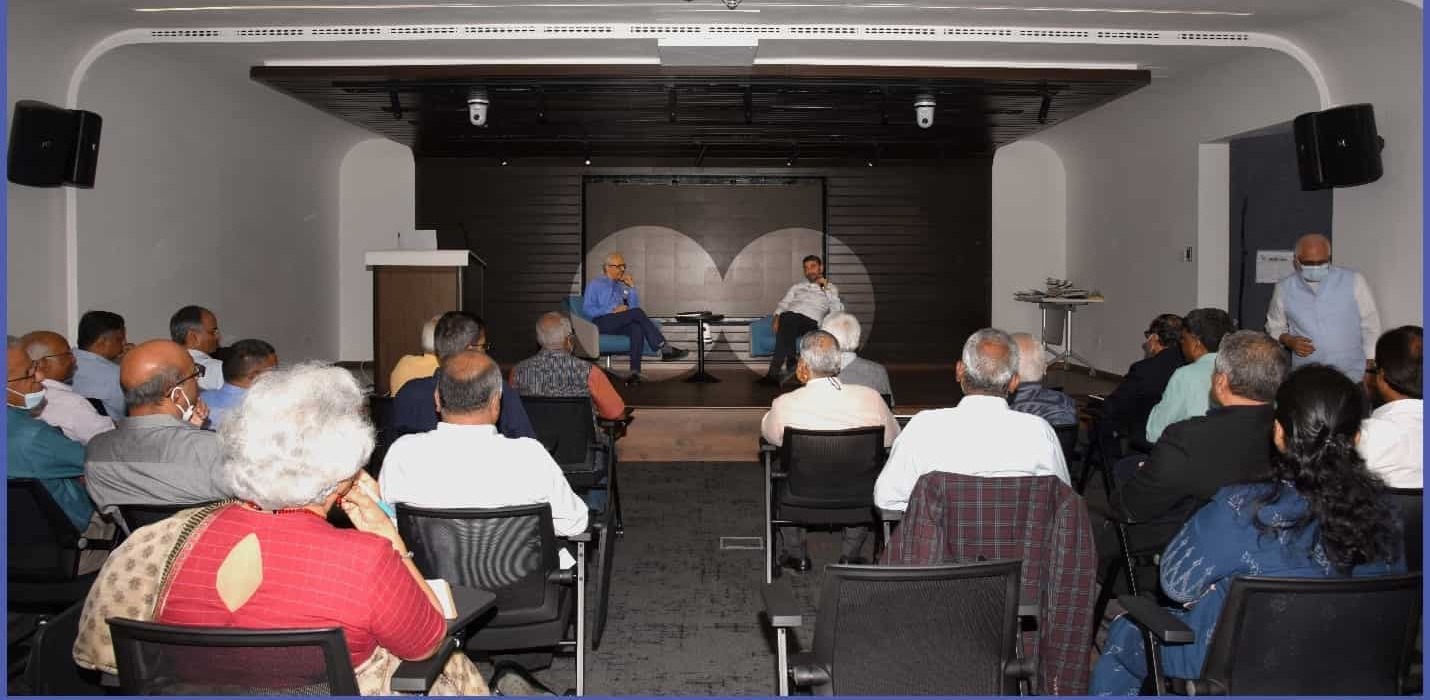
The much-awaited CFI Bangalore (In-person) chapter meet saw cheerful CFI alumni turn up to attend a very well curated Fireside Chat between Mr. Ganesh Chella, the Co-Founder and Managing Director of CFI and Mr. Pradeep Kar, the Founder, Chairman & Managing Director of Microland. A true serial entrepreneur, Pradeep has founded and sold Indya.com to Rupert Murdoch’s News Corporation, Planetasia.com which was India’s first Internet professional services company and Net Brahma Technologies. The event was held at the Bosch Learning Campus on Monday, 17th Oct 2022 and was also live-streamed to enable those outside Bengaluru to participate.
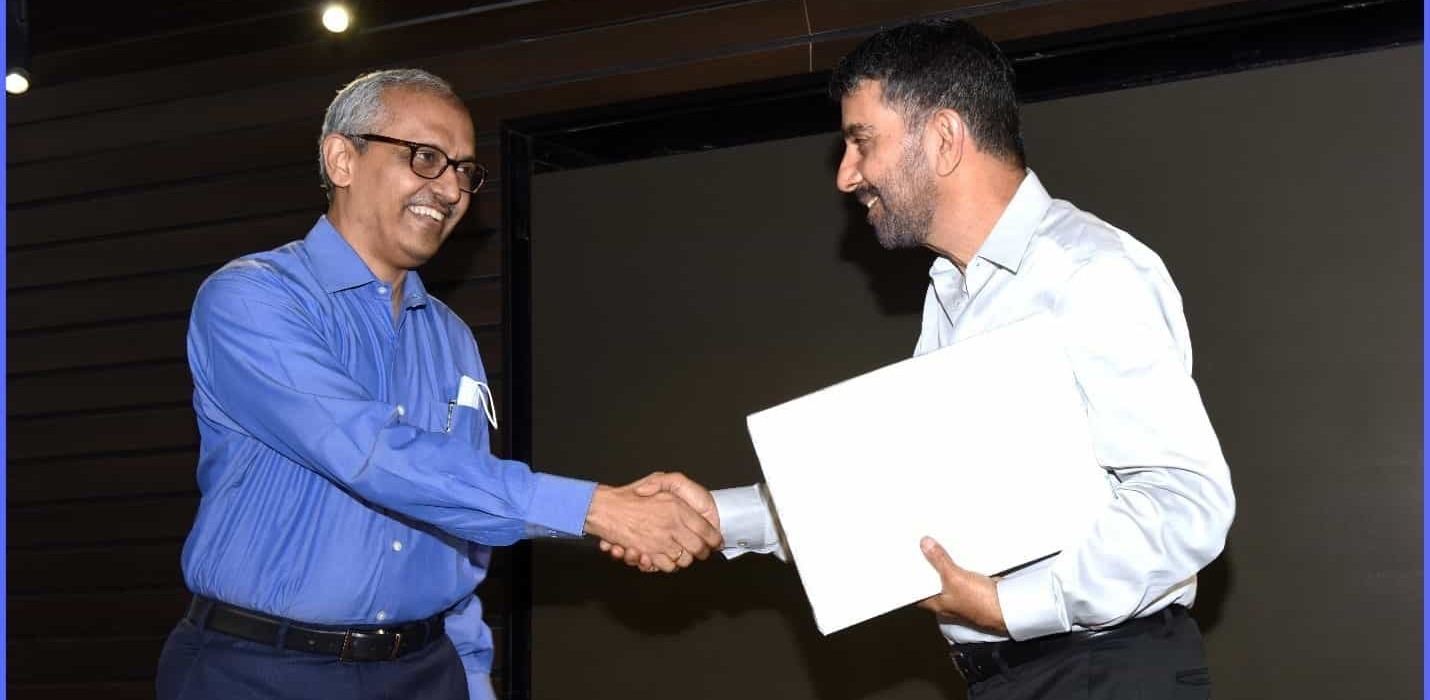
The slightly delayed start due to the Bangalore traffic blues on a busy Monday evening, worked well to provide for some light-hearted banter and camaraderie between the Chief Guest and CFI Alumni. Chapter Vice President Mr. Sri Krishnan did the honors of formally opening the event and inviting Mr. Pradeep Kar and Mr. Ganesh Chella to the dais. In his opening remarks Mr. Srikrishnan spoke of Mr. Pradeep as a person who went after big challenges and he shared with us a question that Mr. Kar had posed in another forum where he asks, “Can India be the solver of a Planet Sized Problem”? That was the kind of big picture that Mr. Pradeep Kar operated from!
Mr. Ganesh Chella in his signature style quickly got down to sketching for Mr. Pradeep Kar, a canvas of CFI covering its beginnings, journey and the impact made by our Coaches across Indian companies in the world of Executive Coaching.
His opening question to Mr. Pradeep Kar. “What excites you most about entrepreneurship?” led to Mr. Kar sharing with us some of his cherished memories on the journey that brought him to this point. He spoke about being a greenhorn automobile engineer to working in the Dalda business of WIPRO (much to the chagrin of his parents), and then on to working in what they imagined was a computer shop called Computer Point in Mumbai to later helping Sonata Software get off the ground in the US and finally coming back to India to start Microland. Interestingly, his plunge into entrepreneurship was taken in the License Raj days, a time when entrepreneurship was considered a dubious journey and most probably not even ethical!
The rest of the fireside conversation steered across different aspects of entrepreneurship. He spoke about how tech driven business are creating models for business 50 to 75 years from now. He also spoke about opportunities available today, the new nature of talent’ and the key to managing talent in a time and space where the definition for loyalty has changed. He finds the defining characteristics of the current generation of Indians to be aspirational, fearless and ambitious.
We also got to know more about Mr. Kar as a human being – a lot of his success could be attributed to the fact that he is a great people person. Being very disciplined and committing himself a hundred percent to all that he does, his mantra is ‘focus on the present; the rest can wait!’. Being very methodical and fiercely obsessed with what he sets out to do, being in the moment is very important to him.
For us Coaches, there were some simple gems that dropped out of some simply-put moments, when Mr. Kar spoke about how important it is for us to be relevant to the people we work with; as a parent is to a child. He dwelled on the importance of having conversations that motivate and leave people energised, especially through difficult situations.
When it came to the topic of talent acquisition and selecting individuals for key roles, his dictum is ‘What a person is able to learn is far more important than what a person knows’. In short, he believes a combination of humility, fierce resolve and willingness to learn are the key elements for being effective as well as successful professionally.
Mr. Pradeep also spoke of the need for greater sensitivity towards women and how being respectful to all aspects of their lives have helped more women come aboard and excel. He also discussed how hybrid work models have become a mainstay in the way business is done today and how such models are creating opportunities that women can take advantage of.
In his closing remarks Mr. Pradeep Kar focused on what he felt was important to the workforce today. He said, “Employees today are looking beyond financial stability from their jobs, they want a more balanced ecosystem”. He stressed on the importance of leaders and companies being human, staying concerned and caring. He went on to say “We need to be sensitive and caring members of society. This will help foster an empathetic society”.
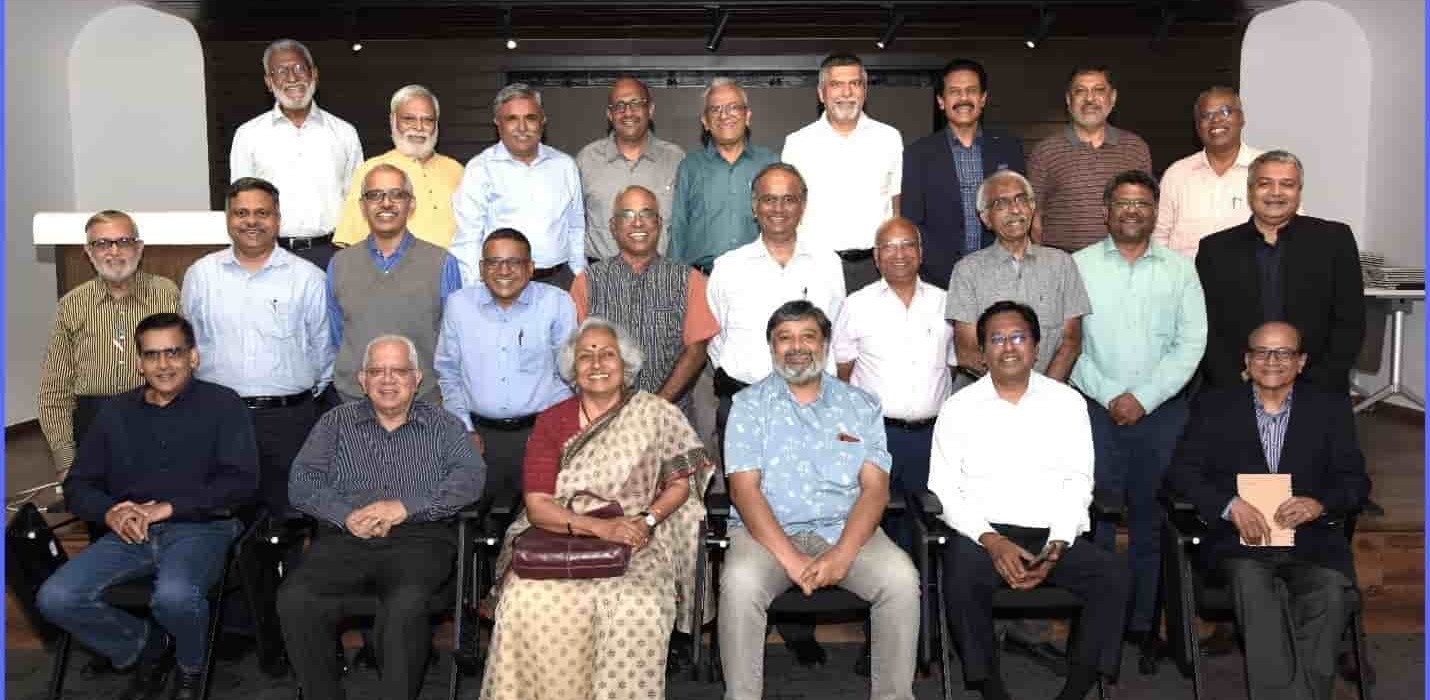
The enriching evening was formally brought to a close with the Bangalore Chapter President Mr. Krishna delivering a heartfelt Vote of Thanks, highlighting some of his own take aways from the conversations of the evening. He specially acknowledged and thanked Mr. Pradeep Kar for the time that he so generously and graciously spent with us. He also thanked Bosch for offering their amazing facilities to host this event and finally the CFI alumni that attended the event in person and online as he brought the curtains down for the evening.
It was an evening well spent.
Article by David Istacky, A Krishna & Sri Krishnan
Photo Credits – BG Dwarakanath
Is there a new way of learning and leading at GE?
GE’s famed Crotonville, started way back in 1956 to grow leaders from within has been put on sale. For the thousands who have been enriched from the experience of being there, there is nostalgia, shock and sadness.
How bad can things be that much celebrated GE decided to sell off what was in the eyes of the world a great symbol of management and leadership excellence?
In my mind, the sale of Crotonville is symptomatic of the much deeper and even historic challenges that GE has been grappling with for several years. From bad strategic choices to poor governance, there are several issues that have been written about.
What strikes me as worthy of exploration is the role of culture, leadership style and effectiveness and its far-reaching implications on the sustainability of a legendary organisation built over more than 125 years.
Culture is the shadow of the leader
Jack Welch was CEO of GE between 1981 and 2001 – for twenty years.
In 1999, he was named Manager of the Century by Fortune Magazine. He was also called Neutron Jack, for eliminating employees while leaving buildings intact.
Published in Jan – Feb 2000, Michael Maccoby’s article titled Narcissistic Leaders describes narcissism as a personality style and its prevalent among corporate leaders. Who are they? The article describes them as Gifted strategists and courageous risk-takers who inspire others and drive their organizations toward a compelling future.
It of course points out their weaknesses include garnering adulation and success, feeling invincible, ignoring cautionary words and taking flagrant risks. Add to this, listening only to information they seek, dominating subordinates, being sensitive to criticism, lacking empathy and having an intense desire to compete. They are the superstar CEOs— actively self-promoting leaders who dominate the covers of business magazines.
Maccoby included Jack Welch as an example to make his point of their pros and cons. Interestingly, his article which was published in early 2000, describes Jack Welch as a productive Narcissist, meaning more pros than cons. (as seen in 2000)
Clearly, as a narcissistic leader, Jack’s shadow appears to have left an indelible mark on the culture of GE.
Now comes succession. Jack Welch is quoted as having said in a 1991 speech, “From now on, [choosing my successor] is the most important decision I’ll make. It occupies a considerable amount of thought almost every day.” Jack’s succession planning efforts like many other things he did were widely written about and hugely admired. It was even seen as a wakeup call to the corporate world.
Jack Welch had set in motion a competition for his succession among three hand-picked high potential long time GE managers. They were Jeff Immelt, Bob Nardelli and Jim McNerney.
Jeff eventually won the race and took over as CEO and Bob Nardelli and Jim McNerney left GE.
On June 12, 2017, GE announced that Immelt would retire as CEO and would be replaced by John L. Flannery. Immelt stepped down in October 2017, after 16 years at the helm.
During Jeff’s time GE was named “America’s Most Admired Company” by Fortune magazine and one of “The World’s Most Respected Companies” in polls by Barron’s and the Financial Times. Jeff was named one of the “World’s Best CEOs” three times by Barron’s.
Flannery however served as CEO from August 2017 until October 1, 2018 only. Prior to ascending to the CEO role, Flannery held leadership roles inside GE for nearly 30 years.
In April 2018, Henry Lawrence “Larry” Culp, Jr became chairman and CEO of General Electric. He was the first outsider to run GE in the company’s 126-year history.
It may be simplistic to conclude that Jack got his succession wrong and the going has been rocky since.
Some argue that Jeff worked to undo the challenges he inherited while creating his own too. Some say the legacy was too deep while other say 16 years was enough time to set things right and it is not fair to talk about Jack Welch 20 years after he stepped down. Others argue that the “top down” and “by any means” culture that had long set in contributed significantly to the challenges.
Books like “Lights out” (2021), “The man who broke Capitalism” (2022) and “At Any Cost” (1999) shed a lot of light on these matters.
For a balanced view, you may like to read Jeff Immelt’s 2021 book, “Hot Seat: What I Learned Leading a Great American Company”.
As GE struggles to recover, albeit as three entities, it is useful to ask ourselves and ponder over some larger questions:
What are the pitfalls of narcissistic leaders and the cultures created by them? How hard is it to change it? Do the roots of their culture run so deep?
What are the challenges of transition when such leaders move on? What kind of leadership will it take for the new leader to deal with changing strategy and culture while continuing to ensure execution and great results? What support will such a leader need?
What is the role of the Board in all this?
At a larger level, does culture eat strategy for breakfast or does leadership eat culture for lunch?
Does succession planning have its limitations when there is need for profound change? In other words, is a leader from the outside a good thing, every once in a while, in the history of an Organisation? Especially when significant amounts of groupthink have set in.
Is market capitalisation as a measure of a leader’s performance and effectiveness, a double-edged sword? (around $ 400 B in 2001 and around $ 85 B in 2022.)
The impermanence of fame and the eternal greatness of the people
Narcissistic leaders and those around them have a habit of using superlatives all the time – “the greatest ever”, the “best ever” “the world’s most powerful”, “most successful”, “Most respected”. This comes out of a sort of hubris and distorted view of history and geography.
What is unfortunate about these cycles of claims to fame and then fall from fame is that it hurts the pride and the lives of the thousands of bright women and men who give a big part of their lives to invent, create and build great products and services that touch and transform the lives of people across the globe.
Did you first fill the form?
As an HR professional and consultant, I have spent a while designing forms that employees need to fill in. Many would not fill them up. Initial irritation and frustration finally turned to insight. I tried to fill those forms myself and I said to myself, “these forms are terrible. How can anyone fill these up?
I have since insisted that we first fill in the forms we design. As I think about this, a larger philosophical question comes to my mind.
The world is today filled with people who are ready to ask others to do something that will benefit them; give advice; share tools and techniques, methods; self-improvement tips; prescriptions; training programs; coaching support; forward stuff that feels good; 10 ways to be happy; 7 rules for success and so on. In an Organisation context, we find it incongruent when the HR department’s engagement score is among the lowest or when the marketing function does not communicate enough and so on.
I dare say, that it is an ethical responsibility on each of us who ask others to do something to be sure that what we are saying is coming from a place of first-hand experience; has been true for us. That would make us credible, congruent and empathetic.
Yes, lets fill the form up first!
Learning to travel light
The manner in which we travel bears lot of similarities with the way we wish to live our lives. Some of us are unable to travel light. So, we suffer and inconvenience others. Some others choose to pack less, and truly travel light.
The pandemic set a lot of us thinking about travelling light, the rest of our lives. That included clearing our cupboards, giving away things and literally de-cluttering. I have done that too. But I have also been looking around and drawing inspiration from people who are able to “travel light” in a truly psychological sense. That to me is true evolution and my aspiration.
As I look around, there are a few things that such people are able to do and therefore travel light and they truly inspire me:
1. confront and resolve residual feelings of hurt, resentment, anger and replace it with forgiveness and kindness. That feels lighter.
2. Revisit relationships and redefine the boundaries and the lists of expectations in these relationships that are adding to the weight. When some of these relationships are shed or the burden of expectations are dropped, it feels light.
3. Revisit the need to control others at work or in one’s personal life and determine the rightness or wrongness of their actions and advice them on what they ought to do weighs heavily. Learning to trust, empower and have faith and let go certainly makes it lighter.
4. The demands one places on oneself and others and the world about how we and and others and the world ought to be is quite heavy. Learning to be flexible and open is certainly lighter.
5. Having desires to “take” from the world is certainly adding to the load. Having desires to “give” is making it lighter. Looking at people who travel light is hope inspiring.
As you read this, I am sure several such light travelers come to your mind too. My travel wish is not so much about visiting places but more about looking at people who are travelling light and learning from them!
Shedding some sunshine on Moonlighting
A lot of sparks have been flying in the past few days on the subject of moonlighting, specifically in the IT industry. I thought some sunshine would help.
Various leaders have been arguing vehemently from their respective logical bubbles – ethical, moral, economic, business and legal. A few things are standing out for me in these narratives.
· Truth is, moonlighting has been in existence for decades. Millions who found themselves in a low wage island had to moonlight to make ends meet. So, working two shifts has been a norm and we have been ok with it because it helped everyone.
· The hue and cry is because it is happening among employees who work for celebrated global organisations and that is new.
· I am not hearing enough number of HR leaders speak up and share their views. After all, this is as HR an issue as it can get. I wish more and more from the profession voice their well-considered insights. Employees are keenly watching what “organisations are saying and thinking”.
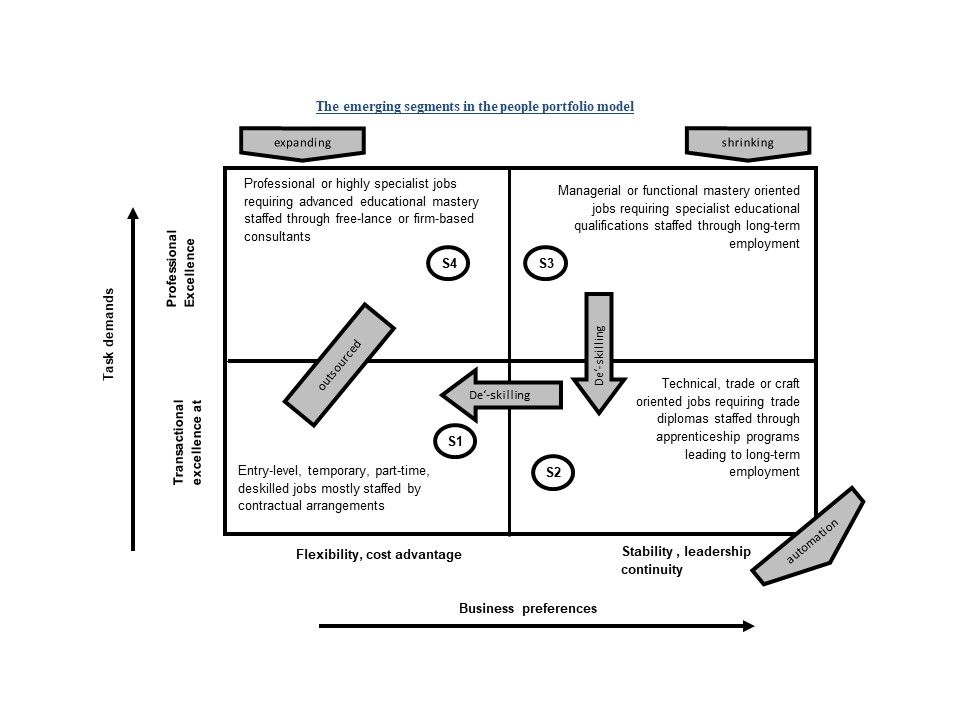
· The employment model has been changing rapidly over the past two decades and these narratives only reinforce these rapid irreversible changes. Please see the chart below capturing what our research back in 2001 said about the emerging segmented approach to employment. Specifically, S3 and S2 jobs are diminishing and S1 and S4 are increasing.
As more and businesses try to restructure to remain competitive, we are only going to create more and more low wage S1 jobs whose holders will be pushed to moonlight. That is sad.
· What is evident from these narratives is a significant realignment of “employer – employee relationships”. The diminishing place of the psychological or the emotional connect, the changing expectation of time versus mind-space, between deliverables at a price and a larger commitment to the cause. What do our employees mean to us?
· While I hear voices of “control” and voices of “indifference”, I am not seeing enough voices of “curiosity” and “empathy”, asking questions like “what is going on?” or “What are the implications?” What do we wish for them? Is quality of life a thing that concerns us?
· Well, this perhaps signals the emergence of a new social order at work, a new way of looking at freedom and autonomy and choices about work and life that businesses are perhaps proposing.
To me, it appears to be somewhat close to the Gestalt Prayer, a 56-word statement authored by psychotherapist Fritz Perls:
I do my thing and you do your thing. I am not in this world to live up to your expectations, And you are not in this world to live up to mine. You are you, and I am I, and if by chance we find each other, it’s beautiful. If not, it can’t be helped.
— Fritz Perls, “Gestalt Therapy Verbatim”, 1969
As you think of retirement
As you think of retirement …You have just a few years left to retire and you have been thinking about it a lot. As you think about it, what is the image that comes to your mind – about your emotional state? A toothpaste tube or a fountain pen? Those who see the need to continue to be in the driver’s set may feel like the toothpaste and those who shift gears and become mentors, coaches and guides are more likely to feel like fountain pens. What do you think?
Great rewards, great resignations and grueling layoffs
I am for a few moments putting myself in the shoes of a young employee and taking an empathetic view – of an employee perhaps fresh out of college or with a couple of years experience.
And, I am trying to make sense of what is going on and I just don’t get it.
I am constantly reading reports about some companies reporting margin pressures and their inability to pay all the variable pay to their employees. I am also reading about a “funding winter” and some of the celebrated start-ups laying off, sorry “right sizing”.
I don’t understand how such large companies are struggling to find money to pay their front-line engineers? Or celebrated unicorns unable to retain their employees.
I am confused.
I want to find answers and naturally google. I quickly stumble upon the recent press announcements about pay revisions for CEOs of these celebrated companies and I do the math and find that the multiples (the gap between what the CEO is paid and what the front-line employee is paid) are dumbfounding to say the least.
I do more googling and read reports about how premium property sales are booming and many of the new owners are from the start-up world.
And then, I am reminded about the fact that my employer wants me to come back to my base location and start reporting for work in person and I am struggling to figure out how I will do it. There are costs involved but I am told I saved a lot these two years!
Thankfully, I have a few job offers on hand and I am tempted to consider them. Of course, I will be called opportunistic. But then, who isn’t, I ask myself.
In the middle of all this, I have this engagement survey to complete. I will be asked if I like my job. Of course I do. Do I like my Manager? Actually, in the larger scheme of things, he is ok. I will be asked if I plan to stay for the next 12months. Of course, I don’t.
You see, I am a rolling stone that gathers no moss. But then, I am rolling because I am seldom on steady ground. Truth is, I am not sure if I am needed or not needed. Am I “talent” or am I “cost?” Should I plan my career or does my organization have a plan? Does my company want to “engage me” or “disengage me?”.
I really wish I could have a conversation with someone about all these dilemmas.
As I step out of the world of the employee, I realise that this is not the whole truth. There are other ways in which organizations are choosing to work. There are other cultural paradigms. Unfortunately, the harsh reality of the marketplace for talent is this – it is a market place and no one is insulated. The choices and actions of one organization and one industry impact the others. More importantly, it shapes the values and beliefs of employees about work and organizations in general. That is the tough part